Estimated Reading Time: 10 minutes
Eczema on Black skin can look and behave differently than the textbooks describe, and the calm most reactive skin needs comes from doing less, consistently, not from the next product you buy.
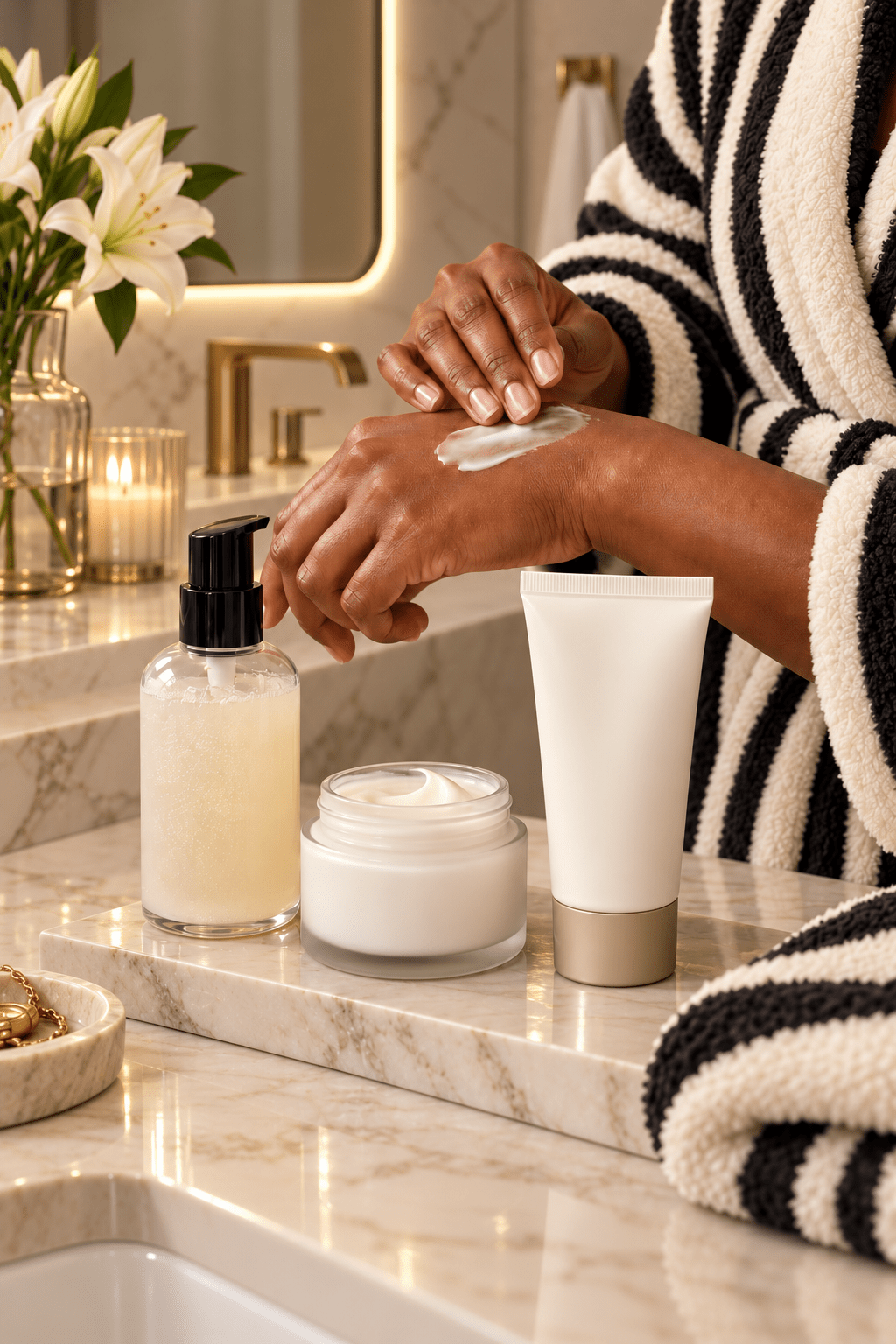
If you have eczema on Black skin, you have probably lost count of the products that promised to be gentle and then left your skin stinging, tight, or flaring anyway. The frustrating part is that relief rarely comes from the next jar on the shelf. Skin that reacts easily tends to settle when a routine gets simpler and steadier, not when it gets busier.
This guide covers a calm, everyday routine for reactive and eczema-prone skin, what to change when you flare, how eczema tends to show up on deeper skin, and when a concern belongs with a board-certified dermatologist rather than a shopping cart.
One thing worth naming up front: reactive skin and eczema are not a barrier you repair once and move past. They are part of how your skin is built, so the aim is to keep it comfortable over the long term instead of chasing it back to some idea of normal. That shift, from fixing to managing, quietly changes almost every product decision you make.
In This Post:
- What Eczema Looks Like on Black Skin
- Is It Eczema or Just Dry Skin?
- Why Reactive Skin Needs Two Routines, Not One
- Your Everyday Calming Routine
- Ingredients That Calm Eczema-Prone Skin
- What to Do When Your Skin Flares
- Why Dark Spots Linger After a Flare on Black Skin
- When to See a Dermatologist
- Go Deeper in the Video
- Eczema Skincare Routine FAQ
- The Bottom Line
- What To Do Next
- Shop With Me
- Sources
What Eczema Looks Like on Black Skin
Most eczema descriptions were written for lighter skin, where a flare reads as bright red. On Black and brown skin, an active flare often looks different. It can appear darker than the skin around it, or grayish, ashy, or carry a purple undertone rather than an obvious red one. The National Eczema Association covers this well in its guide to eczema in skin of color.
Because it does not match the textbook picture, a flare on deeper skin often gets brushed off as dryness, or missed entirely, sometimes for years. The practical move is to pay attention to how your skin feels, not only how it looks in the mirror. Tightness, itch, warmth, rough patches, and areas that will not calm with basic moisturizing are all information, even when there is no red rash to point to.
If you want the fuller picture, start with what eczema actually is and the different types of eczema, then come back here for the routine.
Dana’s Tip: If a patch keeps returning in the same spot no matter how much you moisturize, treat that as a signal rather than stubborn dryness. Note when it flares and what you used, and bring that to a dermatologist.
Is It Eczema or Just Dry Skin?
Dry skin and eczema can look alike on deeper skin, especially in winter, but they behave differently. This is a quick way to tell which direction your skin leans.
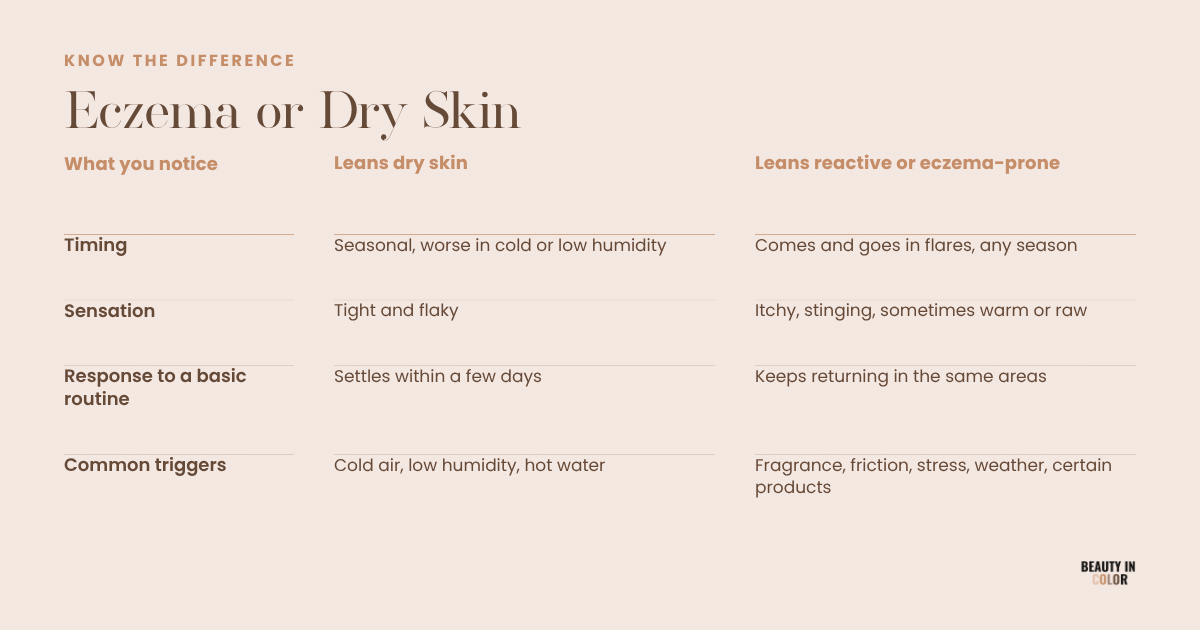
Cold, dry air is a common trigger for both, which is part of why they get confused. If your skin only tightens in winter and a good moisturizer handles it, that leans dry (there is more on that in the guide to winter eczema and seasonal flares). If it itches, stings, or keeps flaring in the same places regardless of season, that leans reactive, and it is worth asking a professional whether it is eczema.
Why Reactive Skin Needs Two Routines, Not One
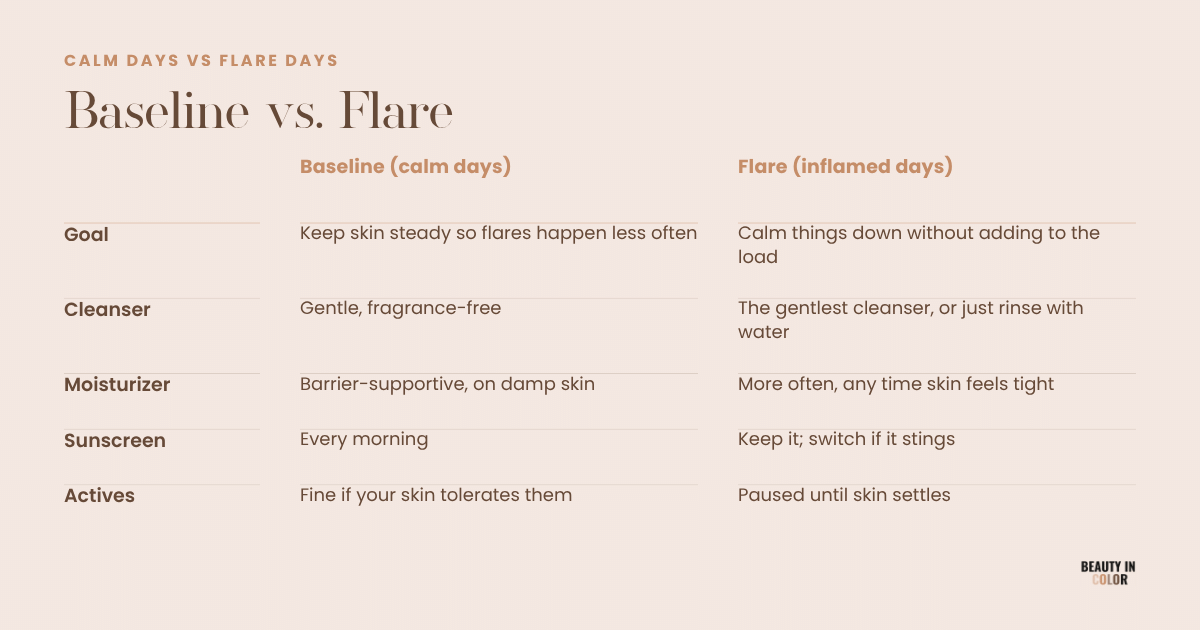
The shift that makes reactive skin manageable is this: you are not building one routine, you are building two. A baseline routine for your normal, calm days, and a stripped-back flare routine for when your skin is inflamed or reacting.
Most people run a single routine and, without meaning to, run it backwards. They coast on good days, then the moment a flare hits they add something. A new treatment, an extra active, whatever promises fast relief. Reactive skin needs the opposite response. The skill is not hunting for a perfect product. It is knowing which routine the day calls for and picking it deliberately.
Your Everyday Calming Routine
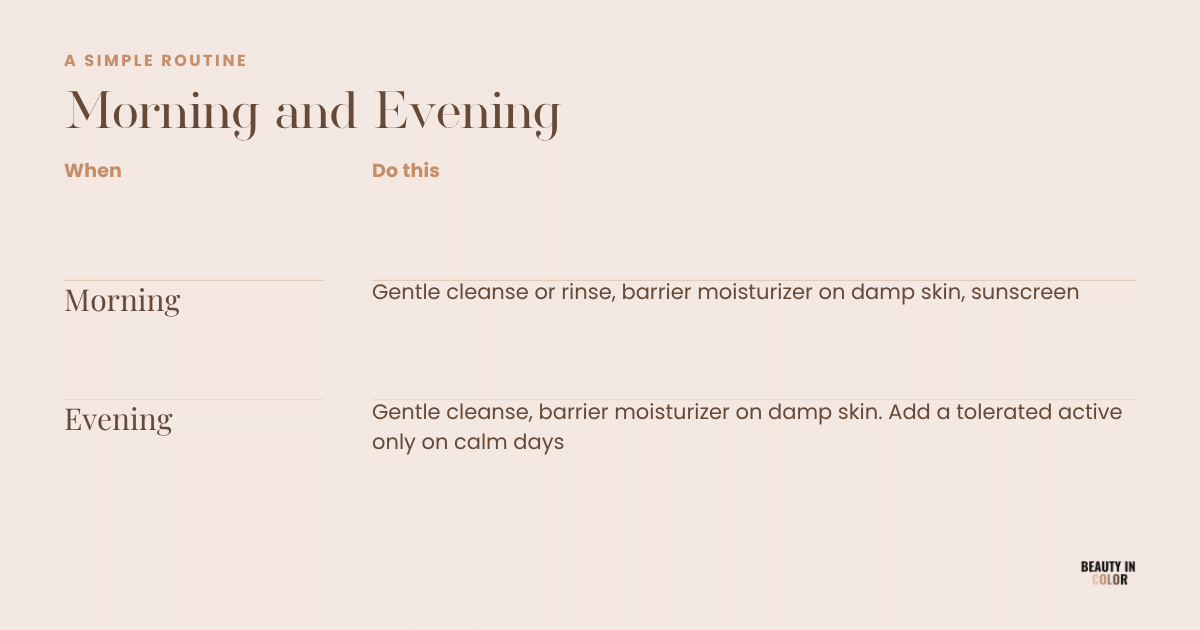
A daily routine for reactive skin should be short on purpose. Three steps you actually keep up with will do more than ten steps you are half afraid of.
FIRST. Cleanse gently with a fragrance-free cleanser, using lukewarm water. Skip hot water, rough washcloths, and spinning brushes.
SECOND. Moisturize with a barrier-supportive formula while your skin is still slightly damp, within about a minute of cleansing, so you trap water instead of letting it evaporate.
THIRD. Apply a broad-spectrum sunscreen every morning.
A couple of things matter extra for reactive skin. Fragrance sets off a lot of reactive skin, and it hides in plenty of products that market themselves as gentle, so the label matters more than the front of the bottle. Washing gently matters too: lukewarm water, no scrubbing. And moisturizing on damp skin helps because reactive skin dries out faster than it should. The American Academy of Dermatology’s eczema self-care guidance backs up the fragrance-free, gentle-washing, moisture-first approach.
Dana’s Tip: Read the ingredient list, not the marketing on the front. A product can say gentle or for sensitive skin and still contain fragrance, which is exactly what reactive skin tends to react to.
A simple version of the two routines, side by side:
Ingredients That Calm Eczema-Prone Skin
When you are choosing something to comfort reactive skin, look for barrier-supportive, soothing ingredients rather than anything meant to treat or exfoliate.
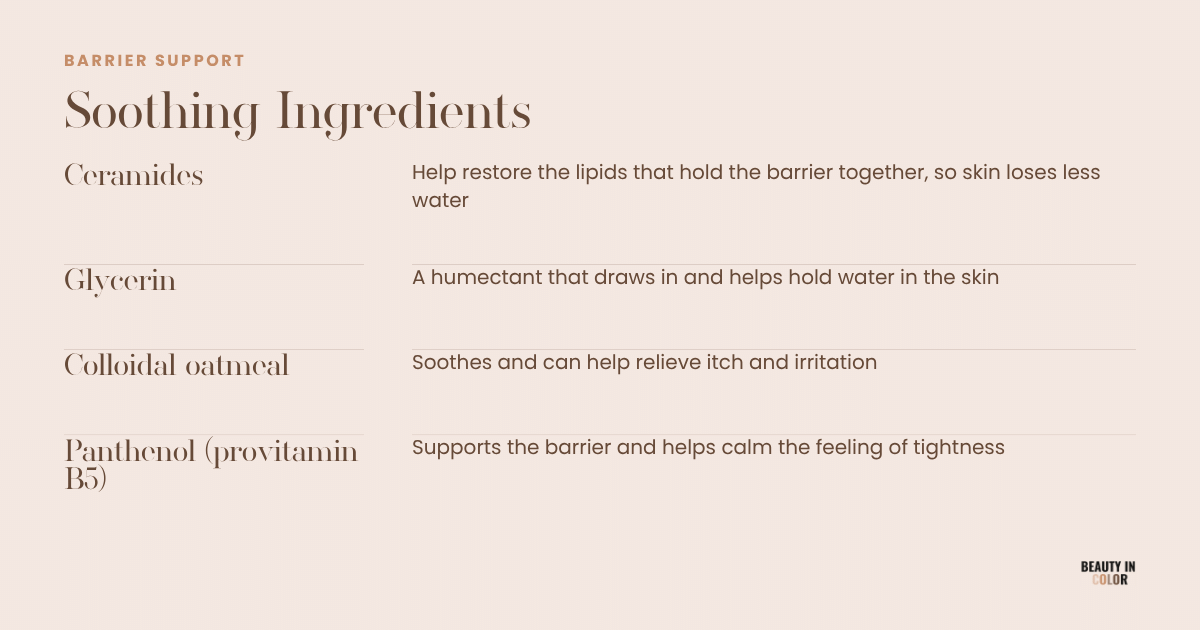
Just as important is what to skip while your skin is unsettled: fragrance, essential oils, and anything active or exfoliating. If you want to go deeper on formulas, the guide to soothing skincare ingredients for eczema breaks them down further.
What to Do When Your Skin Flares
When a flare hits, the instinct is to do more. Do the opposite. A barrier that is already inflamed is overwhelmed, and piling on more products only gives it more to fight. Your flare routine is your baseline, stripped down.
- Pause every active. Retinoids, acids, vitamin C, anything that tingles or is meant to treat or brighten comes out until your skin settles.
- Pare back to the simplest version of your routine. Rinse with water when a cleanser stings, and moisturize more often, whenever it feels tight.
- Keep your morning sunscreen. If the one you have stings during a flare, that is worth noticing.
- Do not experiment. The middle of a flare is no time to be trying something new, even one marketed as calming or for sensitive skin.
Reach for the soothing, barrier-supportive ingredients above, and leave out fragrance, essential oils, and actives. In a flare you are there to soothe, not to treat.
A flare is usually short. You dial things back, keep it simple, and let it settle over a few days. If gentle care is not helping after a couple of weeks, that may be a damaged barrier rather than a flare, which is a different fix. And while a good moisturizer helps the itch, it does not solve a deep, relentless itch. When the itch takes over your days, that belongs with a dermatologist, not a product.
Dana’s Tip: Keep one boring, fragrance-free moisturizer you trust on hand at all times, so a flare never sends you shopping. The middle of a flare is the wrong moment to introduce anything new.
Why Dark Spots Linger After a Flare on Black Skin
For deeper skin there is an extra cost to every flare. When Black skin gets inflamed, it often leaves a mark behind. That is post-inflammatory hyperpigmentation, or PIH: the dark spot left once the skin calms down. On melanin-rich skin those marks can last for months, and they often bother people more than the flare itself did, something the National Eczema Association notes for skin of color.
This is the practical reason to take calm seriously. Every flare you push through instead of letting settle can turn into a spot you spend months fading. On reactive skin, keeping things calm is not the boring choice. It is the strategic one. If fading existing dark spots is your main concern, that is its own topic with its own routine.
When to See a Dermatologist
A good routine can make reactive skin far more comfortable, but eczema is a medical condition, and skincare is not a substitute for medical care. The American Academy of Dermatology is clear that real treatments exist beyond what any routine can do.
See a board-certified dermatologist if:
- your skin is not improving with gentle, consistent care
- you are flaring constantly
- the itch is disrupting your sleep or your daily life
Get seen sooner if a flare looks infected:
- oozing or weeping
- crusting over
- very painful
- you are running a fever
And if you have spent years hearing that your skin is just sensitive or ashy, with nothing ever helping, you are within your rights to ask a dermatologist whether eczema is what is really going on. You are owed a straight answer. If you are weighing who to book, here is how to tell whether you need an esthetician or a dermatologist.
Go Deeper in the Video
In the companion video, I walk through the two-routine approach out loud, show what the everyday routine looks like in practice, and talk through what changes during a flare, including the part most of us get wrong. Watch it on YouTube.
Eczema Skincare Routine FAQ
- What does eczema look like on Black skin?
On deeper skin, an eczema flare often looks darker, ashy, gray, or purple rather than bright red, so it gets mistaken for dryness. Pay attention to how the skin feels (itchy, tight, warm), not just its color. - How do I calm eczema on Black skin?
Do less. Pause actives, simplify to a gentle cleanse and frequent moisturizing, keep your sunscreen, and avoid trying new products during a flare. Give it a few days, and see a dermatologist if it doesn’t improve. - Can I still use retinol or vitamin C if my skin is reactive?
On calm days, if your skin tolerates them, yes. During a flare, pause them until your skin settles. Actives on an inflamed barrier usually make a flare last longer. - Why does my eczema leave dark marks?
Inflammation on melanin-rich skin can leave post-inflammatory hyperpigmentation, dark marks that last months. Keeping flares calm reduces new marks. For fading the ones you already have, see the guide to hyperpigmentation on Black skin. - Is it eczema or just dry skin?
Dry skin is usually seasonal and settles with moisturizer. Reactive or eczema-prone skin itches, stings, and keeps flaring in the same places regardless of season. If a basic routine is not enough, ask a professional.
The Bottom Line
When your skin reacts to everything, chasing one magic product was never the point. It is a calm daily routine you can stick with, a stripped-back flare routine for the hard days, and the judgment to know when a concern belongs with a dermatologist.
Keep it simple, keep it consistent, and stay clear-eyed about what skincare can and cannot do.
On reactive skin, calm is the strategy, not the fallback.
What To Do Next
- Watch the companion video for the routine in practice
- Browse the A Routine That Calms collection for the gentle basics
- Join the Beauty In Your Inbox newsletter for the weekly deeper dive
Shop With Me
The products I keep in rotation plus my budget-friendly picks, all in one place.
- Discount codes: beautyincolor.com/beauty-discount-codes
- My ShopMy edit: shopmy.us/shop/beautyincolor
- Amazon budget picks: amazon.com/shop/beautyincolor_official
- A Routine That Calms collection: the calming routine collection
Sources
- American Academy of Dermatology. Eczema Resource Center: atopic dermatitis care and self-care. aad.org/public/diseases/eczema
- National Eczema Association. Everything you need to know about eczema in skin of color. nationaleczema.org/blog/skin-of-color