Estimated reading time: 12 minutes
If your skin suddenly feels irritated, sensitive, or stings when you put anything on it, the problem is probably not that you need better products. The problem is that you actually need fewer products.
When your skin barrier is damaged, adding more to an already overwhelmed routine usually makes things worse, not better. This shows up most often in women over 40, because our skin becomes drier, more sensitive, and slower to recover than it used to be. The same routine that worked fine a few years ago can start backfiring now.
This post walks you through the full barrier repair protocol. What to stop using right away, what to keep in your routine, how long recovery actually takes, and how to know when your skin is moving in the right direction. The protocol is designed to be sustainable, not extreme. Damaged skin needs less stimulation, more support, and real patience.
If you’re new here, your skin barrier is the outermost layer of your skin that locks moisture in and keeps irritants out. Real foundational reading: What Your Skin Barrier Actually Is. This post assumes you already know your barrier is damaged and you’re ready to repair it.
In This Post:
What Barrier Damage Actually Looks Like
A damaged skin barrier doesn’t always announce itself in some dramatic way. Sometimes it shows up as skin that suddenly feels tight, no matter how much moisturizer you use. Sometimes it looks flaky, rough, or dull. Sometimes your skin starts burning when you apply products that never used to bother you. Sometimes it gets redder, more reactive, more unpredictable. And sometimes it just feels like your routine stopped working.
That’s usually the moment when people think they need to buy something new, add another serum, or try something stronger. But very often, that’s the wrong move. When your barrier is compromised, your skin is already overwhelmed. Adding more to overwhelmed skin usually makes it worse.
Common signs of barrier damage:
- Tightness after cleansing, even when you moisturize
- Stinging or burning when you apply products that didn’t bother you before
- Flaky, rough, or dull-looking skin
- Redness or reactivity that comes and goes
- Breakouts or bumps in unusual places
- A general feeling that your routine just stopped working
If you’re nodding along to two or three of these, your barrier may be compromised. The good news is that recovery is real and often faster than people expect once they stop making it worse.
The science backs this up. Research published in Skin Pharmacology and Physiology describes the skin barrier as a system of four interdependent layers, physical, chemical, microbial, and immune, that work together to maintain hydration and protect against irritants. When that system is disrupted, the right response is supporting the barrier back to function, not pushing it harder.
What Usually Caused It
Most barrier damage doesn’t happen out of nowhere. Usually, it happens because the skin has been pushed too hard. That can look like over-exfoliating with acids, scrubs, or retinol used too often or too aggressively. It can look like using too many actives at once, trying to treat every skin concern at the same time. Or it can look like constantly switching products because you’re chasing faster results.
For women over 40, this matters even more. As we get older, our skin becomes drier, more sensitive, and slower to recover. The same routine that worked fine a few years ago can start backfiring now. That doesn’t mean your skin is failing. It means your routine may be asking more of your skin than it can comfortably handle.
This is also where being thoughtful about what you use matters more than ever. A product doesn’t deserve a place in your routine just because it’s popular, expensive, or all over social media. It should match what your skin actually needs right now. And when your barrier is damaged, what your skin needs is not excitement. It’s support.
Dana’s Tip: Resist the urge to buy your way out of barrier damage. Recovery starts with subtraction, not addition. The next step isn’t a new product. It’s removing the ones that pushed your skin into this state in the first place. Your gentle cleanser, your hydrator, and your moisturizer are the only tools you need right now.
The 5-Step Barrier Repair Protocol
Before you start: Damaged skin doesn’t need more stimulation. It needs less, better support, and real patience. That’s the whole protocol in one sentence.
When your barrier is damaged, the path back is shorter than you think, but it requires you to stop doing some things you may not want to stop doing. These five steps work in order. Each one builds on the last. Skip step 1, and the rest won’t work the way they should.
1. Stop the damage
The first thing you need to do when your barrier is damaged is stop the things that may be keeping it inflamed. That means pausing exfoliating acids. Pausing retinoids. Pausing scrubs. Pausing strong treatment products that are making your skin sting, burn, or feel even more irritated.
And yes, that can include products you normally like. This is where a lot of people get stuck, because they don’t want to stop using the products they paid for, or they’re afraid they’ll lose progress. But a damaged barrier is not the time to push through. It’s the time to back off.
Healthy skin responds better to treatment. Compromised skin doesn’t.
2. Simplify your routine all the way down
Once you stop the obvious triggers, the next step is to simplify your routine. Really simplify it. This is not the time for a long routine. This is not the time for experimentation. This is the time to give your skin the basics and let it recover.
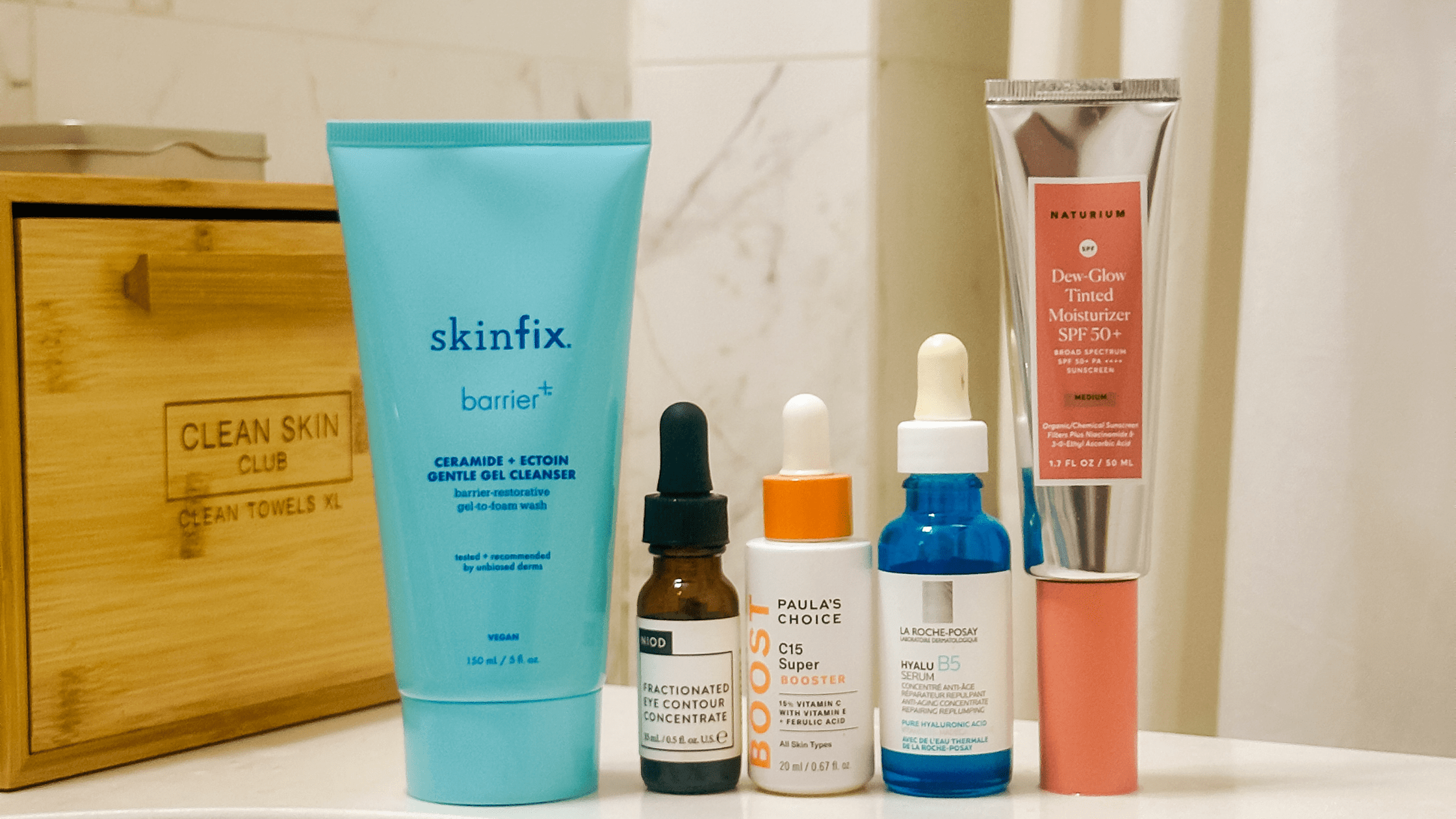
In the morning, that may look like a gentle cleanse (or even just a rinse if your skin does better with less), followed by hydration, moisturizer, and sunscreen. At night, that may look like a gentle cleanse, hydration, and moisturizer. That’s it.
You’re not trying to do the most. You’re trying to calm things down. Simple doesn’t mean ineffective. Simple is often exactly what damaged skin needs. If you’re building your skincare routine from scratch or need a framework for how a minimal routine should be structured, our complete guide to building a skincare routine after 40 walks through the full 4-step framework.
3. Focus on ingredients that support repair
When your barrier is damaged, you want products that help support moisture, reduce irritation, and reinforce the skin. This is where barrier-supportive ingredients matter.
What to look for:
- Ceramides, cholesterol, and fatty acids. These are part of what helps support the barrier itself.
- Glycerin and hyaluronic acid. Hydrating ingredients that draw water into the skin if your skin tolerates them well.
- Panthenol, colloidal oatmeal, and other soothing ingredients. Help reduce that reactive, uncomfortable feeling.
A product doesn’t deserve a place in your routine just because it’s popular or expensive. It should match what your skin actually needs right now. When your barrier is damaged, what your skin needs is not excitement. It’s support.
For a gentle barrier repair moisturizer that hits all three categories above, Skinfix Triple Lipid-Peptide Cream is one I personally use and recommend. It combines ceramides, cholesterol, and fatty acids in a ratio that supports barrier function.
For more barrier-supportive products by category, browse my full barrier repair collection on ShopMy. Every product is one I’ve used personally or recommend based on the ingredient criteria above.
4. Layer hydration and moisturizer together
This is where a lot of people miss the assignment. Hydration and moisturizing are two different things. Hydration is about adding water to the skin. Moisturizing is about helping seal that in and reduce water loss. Damaged skin usually needs both.
If you’re only using a lightweight hydrating serum but not following with a moisturizer, that may not be enough. And if you’re only using a thick cream but your skin is dehydrated underneath, that may not fully address the problem either. You want hydration underneath and a moisturizer on top that helps support and protect the skin while it recovers.
Dana’s Tip: Apply your hydrating serum to slightly damp skin, then layer your moisturizer on top within 60 seconds. That short window helps lock the moisture in before it evaporates. This is the simplest layering habit that makes the biggest difference for damaged skin.
Both steps belong in your routine, and the order matters.
5. Keep sunscreen in the routine (but make it tolerable)
Sunscreen still matters when your barrier is damaged. But your sunscreen shouldn’t feel like punishment. If the one you’re using burns, pills badly, or leaves your skin feeling more irritated, that’s worth paying attention to.
The goal is not to force your skin through products it’s clearly struggling with. The goal is to protect your skin while keeping the routine as calm and supportive as possible. Keep the SPF in your routine. Make sure it’s one your skin can actually tolerate.
Why Barrier Damage Matters More for Melanin-Rich Skin
If you have deeper skin, barrier damage has a second cost beyond the discomfort. Irritated skin in melanin-rich complexions is one of the fastest ways to trigger post-inflammatory hyperpigmentation, or PIH. That’s the dark mark left behind after a breakout, a scratch, or any kind of skin trauma. And it’s the reason barrier care matters more, not less, for Black women.
Here’s what happens. When your skin gets inflamed, your melanocytes (the cells that produce pigment) react. In lighter skin tones, that reaction might fade quickly. In deeper skin tones, that reaction can leave behind discoloration that takes weeks or months to fade. Sometimes longer.
That means every product reaction you push through, every burn you ignore, every “I’ll just give it more time” decision is potentially setting up dark spots you’ll be trying to fade later. The math isn’t worth it.
This is why the protocol matters more for melanin-rich skin. Stop the damage. Simplify the routine. Focus on barrier support. Keep sunscreen tolerable. The discipline pays off twice: your skin feels comfortable again, and you avoid weeks of hyperpigmentation work later.
Dana’s Tip: If you notice a new dark spot forming after a product reaction, don’t try to treat it right away with brightening ingredients. Treat the irritation first, get your barrier stable, then introduce gentle brightening once your skin is calm. Trying to fade a dark spot on damaged skin usually creates more dark spots.
How Long Does Barrier Repair Take?
This depends on how irritated your skin is and what caused the problem in the first place. For some people, mild irritation can start calming down within a few days. For others, especially if the skin has been pushed hard for a while, recovery can take a few weeks.
The important thing is not to obsess over some perfect timeline. The important thing is to look for signs that your skin is moving in the right direction.
What progress looks like:
- Less stinging when you apply products
- Less tightness after cleansing
- Less burning during your routine
- Less flaking
- Less redness and reactivity
- More comfort and consistency overall
- Your skin starting to feel calmer day-to-day
That’s what progress looks like. Not instant perfection. Real recovery is a trend, not a moment.
If you’ve been pushing your skin hard for months, give it at least three to four weeks of the simplified protocol before you start adding anything back in. If your skin is still reactive after a month of consistent, gentle care, that’s a signal worth taking to a board-certified dermatologist who specializes in skin of color.
Watch the Lesson On YouTube
This post is your written reference guide. The companion YouTube lesson walks through the same protocol in a more visual way and helps connect the why behind each step.
Watch the full lesson here:
Barrier Repair FAQ
How do I know if my skin barrier is damaged or if it’s just normal sensitivity?
Normal sensitivity stays consistent. A damaged barrier shows up as a real change. Products that used to work now sting. Skin feels tight even when moisturized. Reactions happen more often than they used to. If you can name a moment when things shifted, that’s usually a barrier signal, not baseline sensitivity.
Can I still wear makeup while my barrier is healing?
Yes, but keep it minimal and skin-friendly. Skip anything with strong actives in it, including makeup with high-percentage acids or vitamin C. Cream formulas tend to sit better on compromised skin than powders. And remove your makeup gently at the end of the day with a cleansing balm or a soft micellar water, not a harsh wipe.
Should I stop wearing sunscreen if it’s irritating my damaged skin?
No. Keep sunscreen in your routine. But switch to a formula your skin can actually tolerate. For melanin-rich skin, look for sunscreens that don’t leave a white cast and are formulated for sensitive skin. If your current SPF is burning or pilling, that’s the product to replace, not the SPF step itself.
How long should I wait before adding actives back in?
Give your skin at least three to four weeks of consistent, gentle care before reintroducing anything. Even then, add one active at a time, start at the lowest frequency, and watch how your skin responds for a week before adding another. The fastest way back into barrier damage is rushing the reintroduction.
Will my hyperpigmentation get worse during barrier repair?
Existing dark spots may look more prominent while your skin is recovering because the overall texture and tone are uneven. They are not actually getting darker. Once your barrier stabilizes and you can layer in gentle brightening ingredients, the spots will start to fade. Protect your skin from the sun in the meantime so you don’t add new ones.
Do I need to see a dermatologist for barrier damage?
Most barrier damage resolves with the protocol above. If your skin has been compromised for more than 4 to 6 weeks with consistent, gentle care, or if you’re seeing signs of infection or severe inflammation, see a board-certified dermatologist who specializes in skin of color. They can rule out other conditions that mimic barrier damage.
The Bottom Line
If your skin barrier is damaged, the answer is usually not more products. It’s fewer products, better support, and more patience. Stop the things that are making the problem worse. Simplify your routine. Focus on hydration and moisturizing. Use products that support repair. And give your skin time to recover.
A damaged barrier doesn’t need more stimulation. It needs less. Once your skin is healthy again, you can start building back in the treatments that make sense for your goals. But not before.
The more you understand how your barrier works, the better decisions you can make about what your skin actually needs at any given moment. That is the mindset behind Beauty In Color: less reactivity, more strategy.
What To Do Next
- Watch the companion YouTube video
- Browse barrier-supportive recommendations: Beauty In Color Approved or my full ShopMy barrier repair collection
- New here? Start Here
- Join the newsletter for weekly skincare education