Estimated reading time: 9 minutes
You use a hyaluronic acid serum daily, and the tightness hasn’t gone away. The serum is probably fine. The step after it is what is missing.
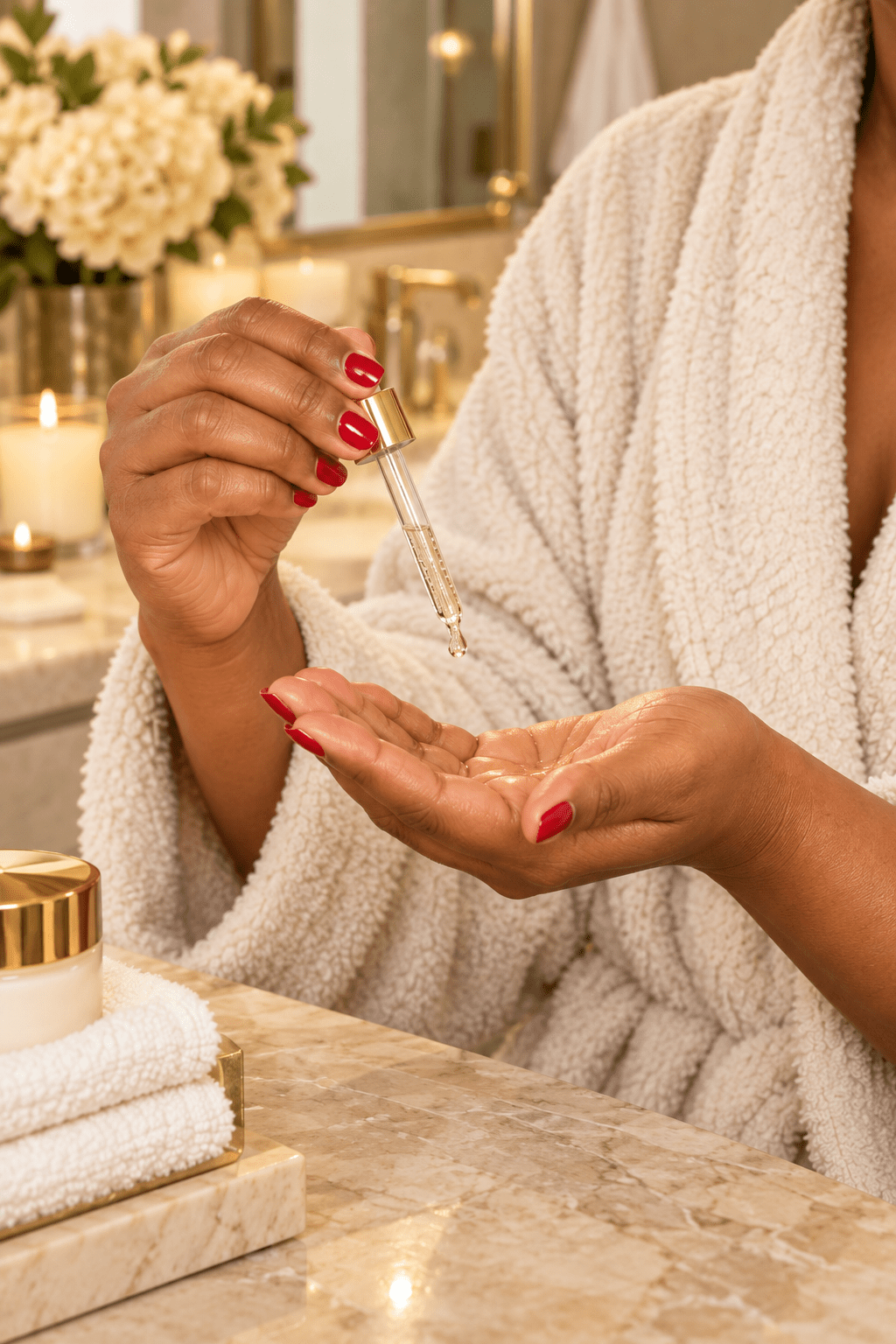
You followed the advice. You added a hyaluronic acid serum to your routine, kept it up daily, and yet by mid-afternoon your face feels tight all over again. Before writing the serum off, it helps to understand what it is really for, because on its own it does only half of what most people assume.
This guide covers what a hyaluronic acid serum really does, the one situation that can backfire and leave you drier, and a simple way to apply it so the moisture stays put. If your skin runs dry or dehydrated, or it has started holding moisture less easily than it once did, getting the water layer right is worth it.
In This Post:
- What a hyaluronic acid serum actually does
- Why your skin can still feel tight after using it
- How to use a hyaluronic acid serum, step by step
- Morning or night: when to use it
- Why the water layer matters more after 40
- When dehydration shows up as dullness, not dryness
- Do you even need a separate hydrating serum?
- Go Deeper in the Video
- Hyaluronic Acid Serum FAQ
- The Bottom Line
- What To Do Next
- Shop With Me
- Sources
What a hyaluronic acid serum actually does
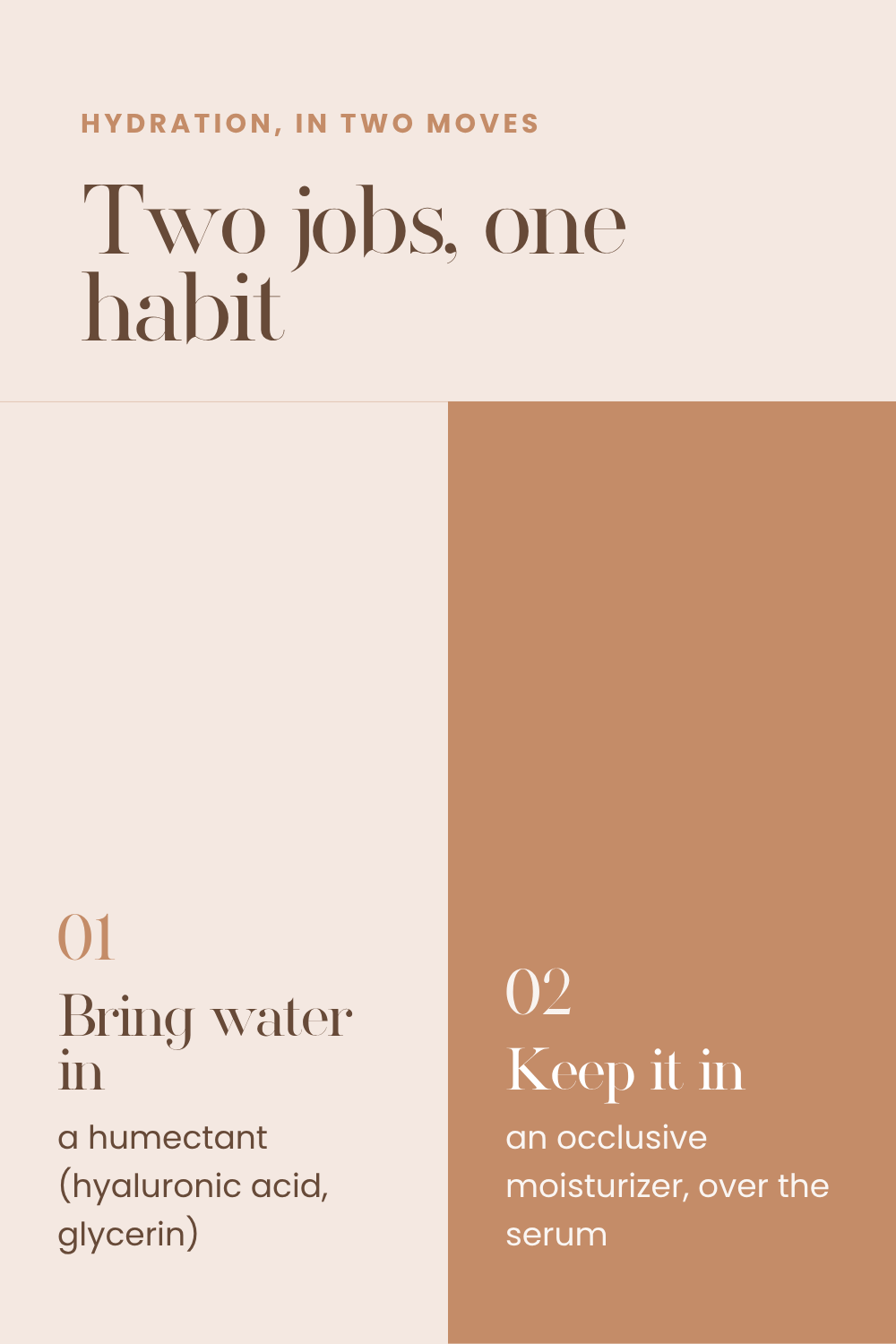
Hyaluronic acid is the name everyone recognizes, but the more useful label is the group it falls into: a humectant. A humectant attracts and binds water, pulling it toward the surface of your skin. That is its entire role.
Hyaluronic acid gets the attention, but plenty of other ingredients are humectants too, and for most of us the humectant we rely on daily is a quieter one. It is glycerin, the everyday humectant that probably already sits high on your moisturizer’s ingredient list.
Here is the distinction that changes everything about how you use it. Getting moisture into the skin and keeping it there are two separate jobs, and a hydrating serum only does the first. It delivers the water. It can’t hold that water in place on its own.
Why your skin can still feel tight after using it
A humectant is not fussy about the source of that water. In a humid room, plenty of it comes from the moisture in the air, which is one reason skin tends to feel easiest in summer. When the air turns dry, there is not much up there to borrow from, so the humectant pulls from the deeper layers of your own skin instead. With nothing layered over the top to hold it, the water it lifted can slip out through the surface.
None of this means the ingredient is a problem, and it is not guaranteed to happen. It is simply a limit of humectants used on bare skin when the air is dry, which is exactly why putting hyaluronic acid on damp skin, then sealing it under a moisturizer, matters so much. It also explains a common experience: reaching for a hydrating serum all through the cold months and still feeling tight. That feeling is real, not something you invented.
How to use a hyaluronic acid serum, step by step
The method is short, and the order is the whole point.
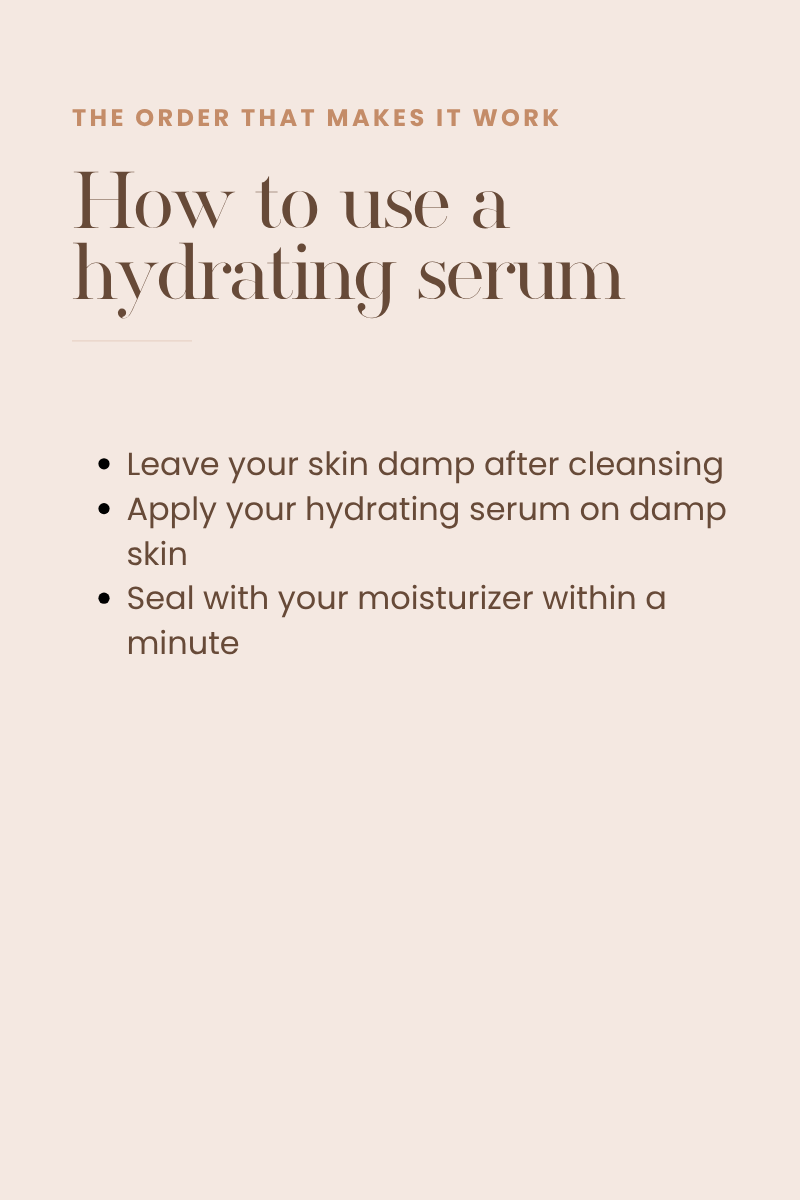
- After cleansing, leave your skin damp rather than towel-drying it fully. It should still feel a little wet to the touch.
- Apply your hydrating serum while your skin is still damp, so moisture sits on top for it to grab instead of reaching deeper layers.
- Seal it. Before the minute is up, while the skin still feels a bit tacky, spread your moisturizer over the serum. That top layer acts as a lid, trapping everything you just applied so it cannot evaporate off.
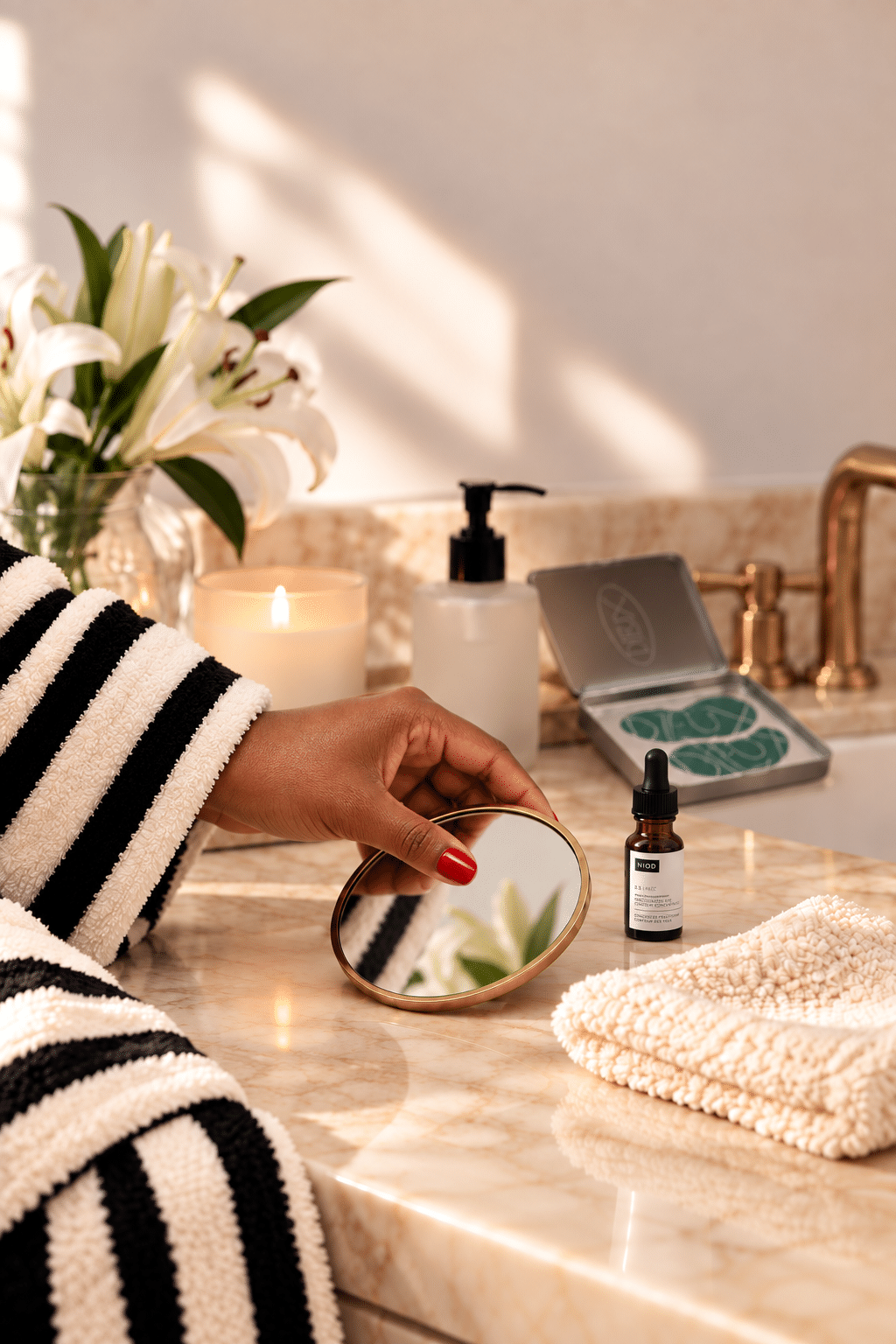
That is the method: damp skin, serum, seal. The serum I keep in this step is NIOD Multi-Molecular Hyaluronic Complex, because I run very dehydrated and want a concentrated dose of that water step year round. For the seal in cooler weather I reach for Dieux Instant Angel. I use both products consistently; I’m not just testing them.
Dana’s Tip: Do not towel your face all the way dry. Leave it damp enough that it still feels cool, then go straight in with your serum before it evaporates.
You will run into endless debate about the molecular weight of hyaluronic acid. For most routines, that detail is more marketing than meaningful, and you can let it go. On safety, there is little to worry about. A hydrating serum is about as gentle as a step gets, and it suits most skin types and ages. The main caution is ordinary: introduce it on its own, not alongside three other new things, and patch test first, as you would with anything unfamiliar.
Morning or night: when to use it
A hydrating serum works morning or night, and using it at both is fine. In the daytime, the sunscreen you layer on helps seal it in. Overnight there is no sunscreen in the mix, so that is usually when the water step needs the most backup.
Dana’s Tip: At night, apply your hydrating serum on damp skin and layer your night cream on top. That pairing keeps the water step doing its job overnight, when skin gives up moisture most easily.
Why the water layer matters more after 40
Your body produces hyaluronic acid on its own, but that output falls as the years go by. Ceramides taper off as well, and the barrier responsible for holding moisture runs a little less efficiently than it used to. Past 40, then, the water layer is no longer optional. It takes over a task your skin once managed on its own, and sealing becomes more important, not less, since a thinner barrier lets moisture escape more quickly.
If you are not sure whether your skin is dry or dehydrated, that is a distinction worth knowing first, because they call for different things. A hydrating serum answers the water problem, not the oil one.
When dehydration shows up as dullness, not dryness
On melanin-rich skin, dehydration often does not show up as flaking or rough texture. It can simply look like a dull, ashy, or flat complexion. The mistake is treating that flatness as something to buff away with exfoliation, when the real gap is moisture. On deeper skin especially, layering on more exfoliation and extra actives is a quick route to irritation, and to the dark marks that so often trail it.
So before you treat a dull, flat look as something to scale back, ask whether the real issue is hydration. Here is a quick way to tell the two apart.
- Dehydration (a water problem): skin looks dull or ashy, feels tight, can still be oily in places, and improves quickly once you add and seal water.
- Dryness (an oil problem): skin feels rough or flaky, tends to be dry all over, and wants richer, more nourishing products rather than water alone.
Do you even need a separate hydrating serum?
Before a new serum lands in your cart, take stock of what is already on your shelf, because there is a fair chance you do not need one.
Two quick checks before you buy:
- Take the moisturizer you already use and scan its ingredients. If glycerin appears high on the list, a humectant is already doing this job for you.
- Then look through your other serums. A peptide or nourishing formula often includes hydrating ingredients like glycerin or hyaluronic acid, which means your water step may be more covered than you think.
Dana’s Tip: Turn your moisturizer over before you spend anything. If glycerin sits in the first few ingredients, you already have a humectant on your shelf, and a separate serum becomes an upgrade rather than a fix.
A dedicated hydrating serum can be a worthwhile addition if your skin tends to run dry and you want a stronger, concentrated water step. Still, it is an addition, not a necessity. The best reason to reach for one is that your skin is genuinely asking for it, not that it happened to be everywhere this month.
Go Deeper in the Video
In this week’s video I talk through the damp-skin-and-seal method out loud, show where the water step sits in a routine, and explain why my own skin needs it all year. If you like to hear the reasoning as much as the steps, watch it here: Why Your Skin Feels Tight After Serum (And How to Fix It).
Hyaluronic Acid Serum FAQ
- Can hyaluronic acid dry out your skin?
It can, in one specific situation. When the air is very dry and nothing is layered over it, a humectant like hyaluronic acid can draw water up from the deeper skin and let it escape at the surface. The answer is not a stronger serum. Apply it to damp skin and seal it under your moisturizer. - Do you apply hyaluronic acid to wet or dry skin?
Damp skin. Leave your face a little wet after cleansing, apply the serum, and follow with your moisturizer within a minute. - When should you use a hyaluronic acid serum, morning or night?
Either works, and both is fine. At night, it earns its place a little more since no sunscreen is helping with the seal, so use it under your night cream. - Does hyaluronic acid matter more after 40?
It can help more, yes. With age, your skin’s own hyaluronic acid and ceramides drop off, and the barrier holds moisture less easily, so the added water layer picks up work the skin once handled by itself. - Do you need a separate hyaluronic acid serum?
Not always. If glycerin ranks high on your moisturizer’s label, a humectant is already in your routine. A dedicated serum is a useful step up for skin that runs dry and wants a concentrated dose of water, but it is not required. - Does hyaluronic acid molecular weight matter?
For most people, not in the way the marketing suggests. How you apply it matters far more than the number on the box. Applied to damp skin and sealed, it does the part that actually changes how your skin feels.
The Bottom Line
A hydrating serum is a humectant, and its job is to bring water to the skin. By itself, it won’t keep that water from leaving. In dry air with no seal, it can even draw from deeper layers and leave you tighter than you started. That is not a reason to skip it. It is a reason to use it the right way.
Apply it to damp skin, follow with your moisturizer within a minute, and check whether a humectant is already on your shelf before buying another. For skin that runs dehydrated, especially after 40, the water layer is one of the simplest and gentlest upgrades you can make.
Hydrate, then seal. The serum is only half the step.
What To Do Next
- Watch the companion video: Why Your Skin Feels Tight After Serum (And How to Fix It).
- See the pieces together in the Hydrate, Then Seal edit.
- Get the weekly note: join Beauty in Your Inbox.
Shop With Me
The products I keep in rotation plus my budget-friendly picks, all in one place.