Estimated reading time: 12 minutes
If you have ever stood in front of a wall of sunscreens and walked out empty-handed, this guide is for you. The endless labels, the mineral-versus-chemical confusion, the white cast that read grey and ashy on your skin, and made you quit. Choosing a sunscreen for dark skin has felt like a gamble for a lot of us, and not by accident. For years, the products were not formulated with our skin in mind, and no one stopped to explain how to actually evaluate one. This post changes that.
By the time you finish reading, you will understand the single difference that explains the grey cast, the only two words on the label that should drive your decision, and how to confirm that a sunscreen will disappear on deeper skin before you commit to it. This is the conscious-consumer approach Beauty In Color brings to everything: ignore the marketing on the front of the bottle and learn what your skin genuinely needs. If you are not yet convinced you need sunscreen at all, begin with Why Most Sunscreen Advice Doesn’t Work for Black Women. This guide picks up where that one leaves off, for the reader who is ready to choose well.
In This Post:
- Chemical vs Mineral Sunscreen, Explained Simply
- What to Actually Read on a Sunscreen Label
- How to Tell If a Sunscreen Will Disappear on Your Skin
- Why Tinted Sunscreen Matters More for Darker Skin
- Sunscreens That Disappear on Dark Skin
- Three Mistakes to Skip
- Watch the Companion Lesson
- Sunscreen for Dark Skin FAQ
- The Bottom Line
- What To Do Next
- Shop With Me
Chemical vs Mineral Sunscreen, Explained Simply
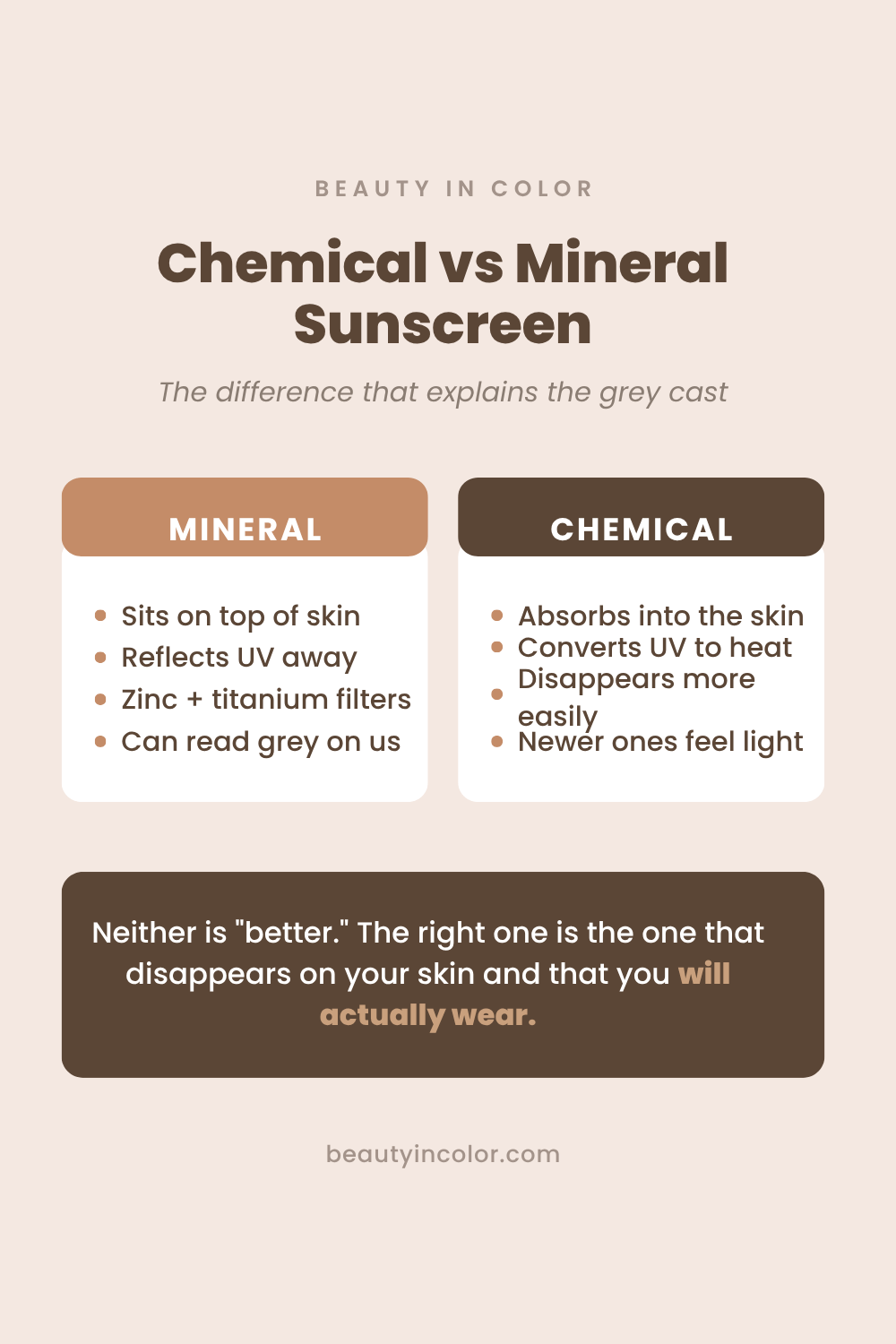
Every bottle is labeled one or the other, yet almost no one explains what the distinction means for your skin. It comes down to a single thing: the method each one uses to protect you.
Mineral sunscreens rely on two active ingredients, zinc oxide and titanium dioxide. They work by resting on the surface of the skin and reflecting UV rays back away from it, like a physical barrier. Chemical sunscreens take the opposite approach. They absorb UV rays into the formula so the rays are neutralized before they reach your skin. Two different mechanisms, one shared goal.
The reason this matters so much for deeper skin lives in one small detail: zinc and titanium are naturally white. When a mineral formula sits on the surface of darker skin, that whiteness can surface as a grey or ashy film. That is the cast, and its cause is worth stating plainly, because so many of us were taught to blame ourselves for it. The cast is a property of the formula, not a flaw in your application. Chemical formulas, because they absorb rather than sit on top, tend to sidestep the cast entirely, which is also why many of the newer chemical and hybrid options feel lighter and are easier to reapply over the course of a day.
There is one more belief worth examining: that mineral is automatically the gentler choice for sensitive skin. It holds up, but only partway. Mineral filters do tend to trigger fewer reactions because they rest on the surface instead of sinking in. What that advice leaves out is that most sunscreen irritation does not come from the UV filter at all. It comes from the fragrance, the preservatives, and the other inactive ingredients in the bottle, and the research on sunscreen reactions points there far more often than to the filters themselves. As someone with sensitive, eczema-prone skin who wears chemical sunscreen without trouble, I can tell you the more useful rule is this: for reactive skin, fragrance-free and simple usually matters more than mineral versus chemical.
Dana’s Tip: If you have already found a mineral sunscreen that disappears on you and feels good, keep it. Mineral is not the villain here, and in a moment, you will see why one particular kind of mineral formula may be the best option of all for deeper skin. The goal was never a category. The goal is a formula that behaves on your skin.
What to Actually Read on a Sunscreen Label
Most of what is printed on the front of a sunscreen is there to sell you, not to inform you. Strip it away and there are only two things you genuinely need to confirm. Find them, and the overwhelming wall of bottles narrows quickly.
- SPF 30 or higher. Treat this as your daily floor, not a target to outdo. There is little reason to chase SPF 70 or 100, and a very high number can lull you into applying less or reapplying never. What protects you is the amount you apply, not the figure on the label. A generous, even layer of SPF 30 will outperform a thin, rushed layer of SPF 60 every time.
- The phrase “broad spectrum.” This is the one most people overlook. On its own, the SPF number speaks mainly to UVB, the rays responsible for burning. It tells you nothing about UVA, the rays that age skin and drive pigment. According to the FDA, “broad spectrum” is a regulated term reserved for products proven to defend against both UVA and UVB. For deeper skin, where pigment is the central concern, UVA protection is not a bonus. If a label does not say broad spectrum, set it back down.
As for the rest of the front of the bottle, treat it as background noise. “Reef safe” is not a regulated claim. “Clean” and “natural” say nothing reliable about whether a formula is gentler or safer for your skin. Do not let those words choose for you. Confirm SPF 30 or higher and broad spectrum, and most of the shelf has already sorted itself.
How to Tell If a Sunscreen Will Disappear on Your Skin
Once you have filtered down to the broad-spectrum, SPF 30 contenders, the final decision rests on two honest questions.
- Will you genuinely wear it? Notice how it feels, whether it pills under your moisturizer or makeup, and how easy it is to reapply. The right sunscreen is rarely the highest SPF or the priciest one. It is the one you reach for on autopilot every morning, because a perfect sunscreen sitting in your cabinet protects nothing.
- Does it actually disappear on you? Swatch it on your jaw or the back of your hand and look in natural daylight, never the store’s overhead lighting. Does it melt in, or does it leave that telltale grey film? Snap a photo on your phone while you are at it, because a flash reveals a cast that a mirror can hide. If it greys you out in the picture, it is not your sunscreen, no matter how glowing the reviews are.
Dana’s Tip: This is the moment tint earns its keep. The pigment in a tinted sunscreen neutralizes the grey, so instead of a chalky layer you get a finish that quietly evens your skin. For many of us, tint is the line between a sunscreen we tolerate and one we genuinely look forward to using.
Why Tinted Sunscreen Matters More for Darker Skin
Here is the piece almost no one explains, and it is the reason a tinted sunscreen is not a cosmetic afterthought for deeper skin. It may be the most important kind you can own.
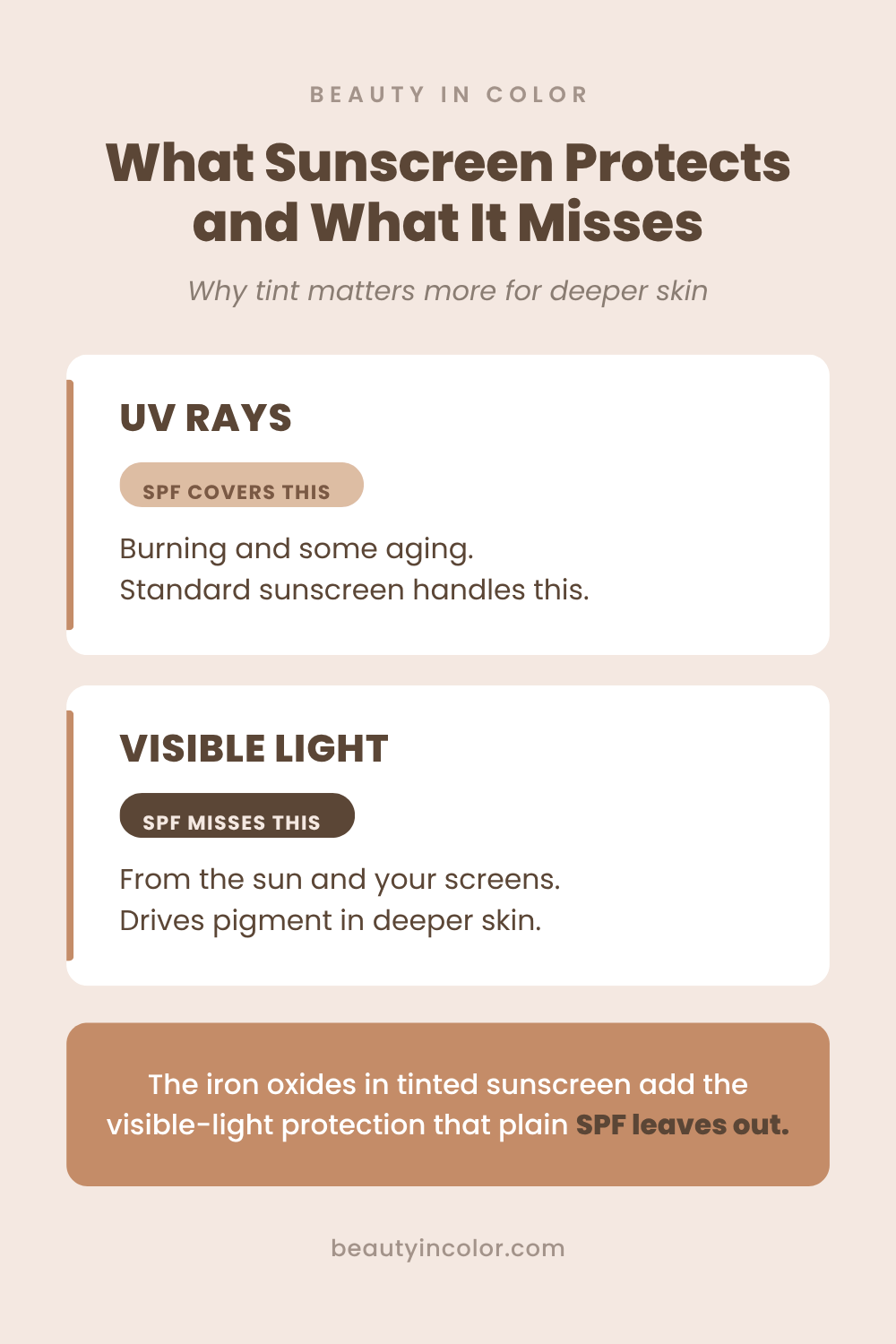
Sunlight is not only UV. A large share of it is visible light, the same kind that pours off your phone and laptop screens, and visible light is a genuine driver of pigment in darker skin. It is part of what feeds the dark spots and uneven tone that so many of us spend money trying to correct. The frustrating catch is that the SPF number on a standard sunscreen measures UV protection only. Against visible light, it does nothing.
This is where the tint stops being decorative. The pigments that give tinted sunscreen its color are usually iron oxides, and iron oxides happen to shield skin from visible light. A 2020 study in the Journal of Drugs in Dermatology (Dumbuya, Grimes, et al.) found that formulas containing iron oxides protected darker skin against visible-light-induced pigmentation in a way a non-tinted mineral SPF 50 sunscreen could not. So for us, that tint is doing double duty: it cancels the cast and it adds a layer of defense against the precise thing our skin is most prone to.
For years the shelf was not built for us, from the cast to the missing shades, and then we were handed the blame for not using it correctly. That is finally shifting, and the tinted, no-cast formulas available now are the proof.
Sunscreens That Disappear on Dark Skin
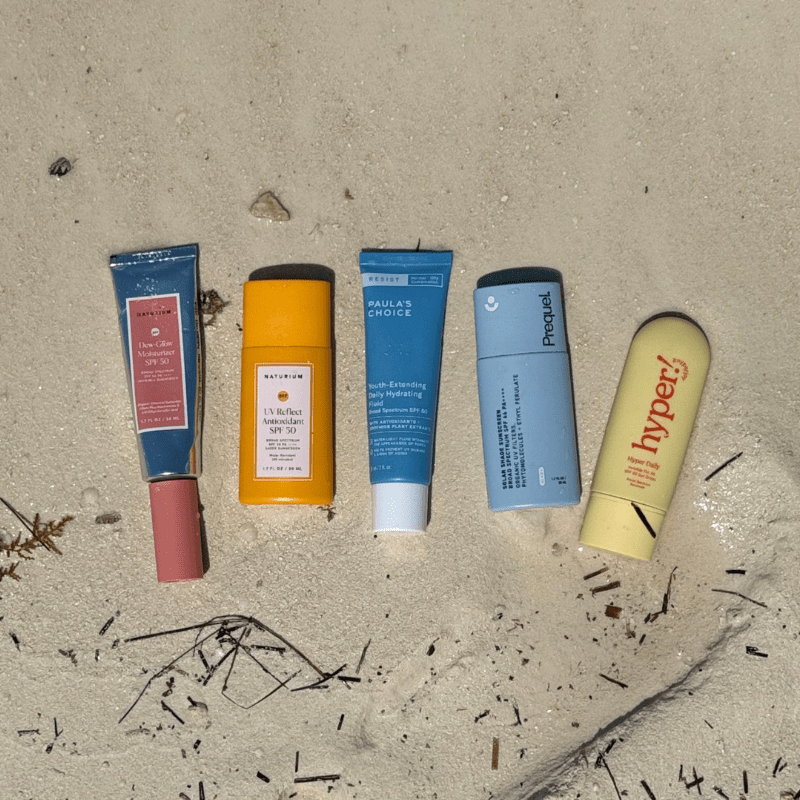
Before any names, the whole philosophy in one line: a sunscreen earns its place by disappearing on your skin, protecting against both UV and visible light, and feeling good enough that you will actually wear it. With that filter in mind, here are a few I keep in rotation.
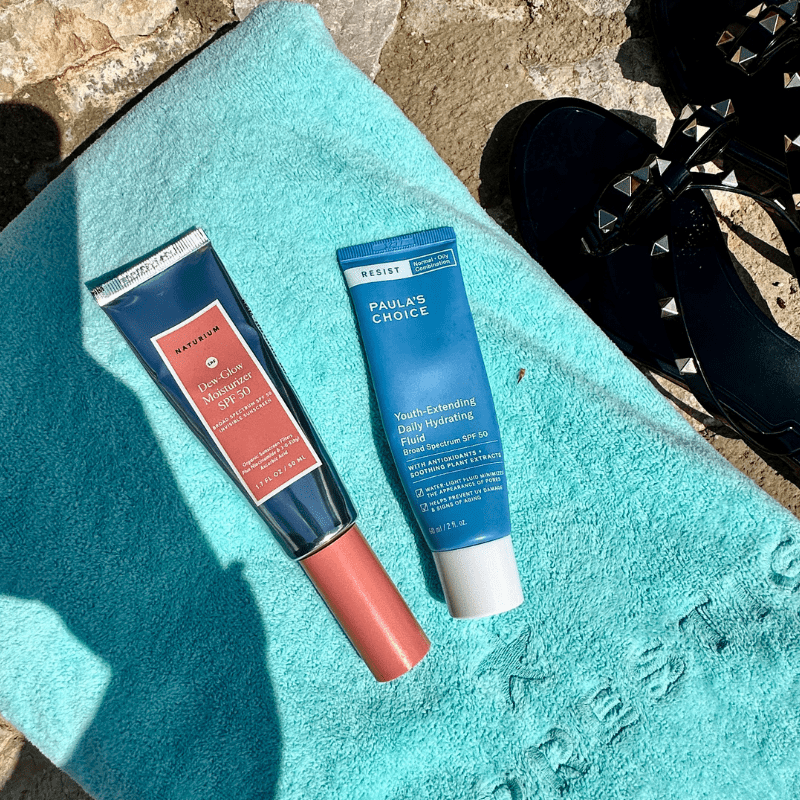
The one I reach for most is the Naturium Dew-Glow Moisturizer SPF 50, the broad-spectrum, untinted version. It is light, it layers clean, and it disappears, which is the whole test. Naturium also makes tinted broad-spectrum versions, and I rotate those in depending on the season. The tint in those comes from iron oxides, so they add the visible-light protection an untinted formula cannot, the double duty described above: no cast, plus a layer of defense against pigment. Naturium has recently added a mineral sunscreen option as well. I have not tried those yet, but given how the rest of the line has worked for me, they are next on my list.
A couple more I keep close: the Paula’s Choice Youth-Extending Daily Hydrating Fluid SPF 50, a lightweight broad-spectrum fluid that layers cleanly and was the one that first got me consistent, and a Kiehl’s Better Screen™ UV Serum-In-Stick SPF 50+ for reapplying over makeup, since the easiest reapplication method is the only one you will actually use.
For my full roundup of brown-skin-friendly picks, including options I have tested and compared, see The 7 Best Brown-Skin-Friendly Sunscreens. You can also browse the no-cast sunscreens I keep and update in my sunscreen collection. In the spirit of conscious consumerism, a note: several of the formulas I love are not affiliate links. I would rather tell you what works on my skin than point you only toward what I can link.
Dana’s Tip: When you find a sunscreen that genuinely disappears on your skin and feels good to wear, buy a backup before it runs out. Consistency is what protects your skin, and you protect consistency by never letting yourself run empty.
Three Mistakes to Skip
- Shopping the front of the bottle. “Clean” and “natural” are marketing language, not information. The two details that actually decide it, SPF 30 or higher and broad spectrum, live on the back.
- Treating a higher SPF number as better. An SPF 30 applied generously and reapplied will outprotect an SPF 100 you smear on once and forget. The number is not what protects you. Wearing it is.
- Dismissing an entire category after one bad experience. One mineral formula greyed you out, so mineral got crossed off. One chemical formula stung, so chemical did too. But that was one product, not a whole category, and the right formula for your skin is out there, very likely more than one.
Watch the Companion Lesson
This post is your written reference. The companion YouTube lesson covers the same ground in a more visual way, including what the grey cast actually looks like on deeper skin and how a tinted formula vanishes into it. Every YouTube topic at Beauty In Color is built to pair with a searchable, reference-friendly post like this one.
Watch the full lesson here:
Sunscreen for Dark Skin FAQ
- Is chemical or mineral sunscreen better for dark skin? Neither is universally better. Mineral formulas can leave a grey cast on deeper skin because the filters are white, while chemical formulas tend to absorb and disappear more readily. The right one is whichever disappears on your skin and earns daily wear.
- Why does sunscreen leave a grey or ashy cast on my skin? The cast comes from the white mineral filters, zinc oxide and titanium dioxide, resting on the surface of the skin. It is a formula characteristic, not an application error. Tinted formulas use iron oxides to cancel it.
- Do Black women really need sunscreen every day? Yes. Melanin gives you a head start, not full coverage. For deeper skin, the larger concern is not burning but pigment, the dark spots and uneven tone the sun drives. Daily broad-spectrum sunscreen is the single most effective way to protect your tone over time.
- What SPF should I use for dark skin? SPF 30 or higher, every day, applied generously and reapplied. Going above 30 is fine, but applying enough and reapplying matters more than the number on the label.
- Is tinted sunscreen better for darker skin tones? Often, yes. The iron oxides that give tinted sunscreen its color also defend against visible light, which drives pigment in deeper skin. A good tinted formula gives you no cast plus an extra layer of protection.
The Bottom Line
Choosing a sunscreen for dark skin is not about hunting down the purest, the priciest, or the highest SPF. It is about finding the one that disappears on your skin, defends against both UV and visible light, and feels good enough that you reach for it every single day. Learn the one real difference between chemical and mineral, find the two words that matter on the label, and lean on tint for both the clean finish and the visible-light protection your skin most needs.
For years we were handed sunscreen advice written for someone else, then told we were the problem. You were never the problem. The formulas were not made for you, and that is changing. Choosing well now is one of the quietest, most powerful decisions you can make for how your skin ages. The better you understand how to choose, the harder every other step in your routine gets to work.
What To Do Next
- Watch the companion YouTube video
- Browse the no-cast sunscreens I reach for
- New here? Start Here
- Join the newsletter for weekly skincare education
Shop With Me
The products I keep in rotation, plus my budget-friendly picks, all in one place.
- My discount codes: beautyincolor.com/beauty-discount-codes
- My full edit on ShopMy: shopmy.us/beautyincolor
- My budget-friendly Amazon picks: amazon.com/shop/beautyincolor_official