Estimated reading time: 16 minutes
Dry skin and dehydrated skin get talked about as if they’re the same thing. They aren’t. Dry skin is missing oil. Dehydrated skin is missing water. And once you know which one yours actually is, your routine choices get a whole lot clearer.
If your skin feels tight after you moisturize and you can’t figure out why, you might be in the second category. This post walks through what dry and dehydrated skin actually are, how to tell which one yours is, and what to do about either one. By the end, you’ll know which question to ask in front of your bathroom mirror, and which product is actually going to help.
A quick note before we get into it. Beauty In Color teaches skincare with the goal of helping you understand your skin, not just memorize routines. So we’re going to spend a little time on what’s actually happening at the surface of your skin before we get to the product part. That part matters too, and we’ll get there.
In This Post:
- What Dry Skin Actually Is
- What Dehydrated Skin Actually Is
- Why You Can Be Both Dry AND Dehydrated at the Same Time
- The Science of Hydration and Moisturizing
- The Hydration Sandwich
- Why This Matters More in Your 40s
- What This Means for Black Women Specifically
- What to Look For (and What I Use)
- Watch the Companion Lesson
- Dry or Dehydrated Skin FAQ
- The Bottom Line
- What To Do Next
- Shop With Me
What Dry Skin Actually Is
Dry skin is a skin type. It’s a long-term tendency, something you generally are rather than something you become overnight. The underlying issue is oil production. Your skin doesn’t make enough sebum or enough of the lipids that hold moisture in place, so it has a hard time keeping water locked into the skin where it belongs.
If you’re new here, your skin barrier is the outermost layer of your skin, the part that locks moisture in and keeps irritants out. For a deeper look at what it is and why it matters, start with this post on what your skin barrier actually is. For now, just know that one of the barrier’s main jobs is preventing water loss, and that job depends partly on those lipids your skin produces. When the lipids aren’t there in enough quantity, your barrier can’t seal water in the way it’s supposed to.
The signs your skin is dry:
- Flakiness. Visible flakes or dry patches that don’t go away with moisturizing for a day.
- Rough texture. Skin that feels uneven to the touch, even when it’s not actively flaky.
- Persistent tightness. A pulled, drawn feeling that’s there most of the time, not just after cleansing.
- Lack of healthy oil shine. Skin that looks consistently matte, sometimes to the point of looking ashy or dull.
If you’re seeing three or four of these regularly, you’re likely working with dry skin as a type.
Dana’s Tip: Dry skin can feel like a quiet personality trait at 28, the kind of thing you adapt to without thinking. Then suddenly at 43 it shows up louder, because your skin’s natural lipid production has been slowly declining the whole time. You’re not imagining the change. Your skin really is drier than it used to be, and that change accelerates after 40.
What Dehydrated Skin Actually Is
Dehydrated skin is a skin condition, not a type. Where dry skin is about oil, dehydrated skin is about water. Your skin is short on water content specifically, and it can happen to any skin type, including oily skin. That’s the part most people miss.
Dehydration is also addressable. The good news is that you can treat it. The not-so-good news is that it sticks around as long as whatever’s causing it sticks around. Common causes include over-cleansing, a damaged barrier, dry indoor heat, certain medications, and the natural changes that come with age. Address the cause and you can correct the dehydration. Leave the cause in place and it comes right back.
The signs your skin is dehydrated:
- Your skin drinks moisturizer and still feels tight. This is the giveaway. You apply your cream, and within an hour your skin feels like you never moisturized at all.
- A tight feeling, especially after cleansing. Skin that feels drawn the moment you step out of the shower, before you’ve had a chance to apply anything.
- Dullness. Skin that looks flat or gray rather than glowing, even when there’s no flakiness involved.
- Fine surface lines that come and go. Crepey-looking lines that show up after a long day and ease overnight after you hydrate.
- Makeup that sits weird. Foundation that grabs onto dry patches or doesn’t blend smoothly even when your skin doesn’t look flaky.
Dana’s Tip: If your skin drinks moisturizer and still feels tight, that’s the single most reliable signal that you’re dealing with dehydration, not dryness. People react to it by reaching for a heavier moisturizer, which doesn’t solve the problem because the issue isn’t oil. The issue is water, and a heavier moisturizer doesn’t add water. It seals in water that has to already be there.
Why You Can Be Both Dry AND Dehydrated at the Same Time
Here’s the part that changes the diagnostic question entirely.
Dry skin and dehydrated skin are not mutually exclusive. You can have dry skin as your underlying type, meaning your skin doesn’t make enough oil, and ALSO be dehydrated as a current condition, meaning your skin is short on water right now. The two issues compound each other. Dry skin is more likely to become dehydrated, because the lipid shortage makes it easier for water to escape. And dehydrated skin, when left unaddressed in someone with dry skin, can become a chronic cycle.
So is my skin dry or dehydrated? That’s the question most people walk into the bathroom mirror asking. But the better question, the one that actually leads to a working routine, is this. Is my skin missing water, missing oil, or both? Because the answer determines what you reach for, and reaching for the wrong thing makes the problem persist.
If you’re missing water, you need a hydrator. If you’re missing oil, you need a moisturizer. And if you’re missing both, you need both, in the right order. That’s the diagnostic insight everything else in this post builds on.
The Science of Hydration and Moisturizing
Hydration and moisturizing are two different jobs, and they’re done by two different categories of ingredients. Understanding the difference is how the products on your bathroom shelf stop looking interchangeable and start making sense.
Hydration is the job of humectants
A humectant is an ingredient that attracts and holds water. The most well-known humectant is hyaluronic acid, but glycerin and panthenol (sometimes called pro-vitamin B5) are also humectants. Glycerin in particular is one of the most underrated ingredients in skincare. It shows up in almost everything, costs very little, and works.
Humectants behave like tiny sponges. They pull water toward the skin and hold it there. But here’s the catch worth understanding. They have to pull water from somewhere. In a humid environment, they pull from the surrounding air. In a dry environment like winter air, plane cabins, or indoor heating, they can actually pull water from the deeper layers of your skin up to the surface, where it can evaporate. That’s the opposite of what you want.
This is why the way you apply a humectant matters as much as the humectant itself. We’ll get to that in the next section.
Moisturizing is the job of occlusives and emollients
Moisturizers work in a fundamentally different way. They don’t add water. They keep water from escaping through two types of ingredients.
- Occlusives form a physical seal on the surface of your skin that prevents water from evaporating. Common occlusive ingredients include ceramides, fatty acids, squalane, and plant butters like shea butter.
- Emollients smooth and soften the spaces between your skin cells, filling gaps and improving texture. They also help prevent water loss, though through a softer mechanism than occlusives.
Both jobs (the sealing and the smoothing) are about keeping water in, not adding water. That distinction matters because it explains why a moisturizer alone often isn’t enough. If your skin is already short on water, a moisturizer seals in a deficit. There’s nothing for it to lock in.
That’s why for a lot of people, particularly anyone in their 40s and beyond, the routine needs to do both jobs: add water, then seal it in.
The Hydration Sandwich
The hydration sandwich is the technique that puts the two jobs in the right order. It’s three steps, and once you understand the why behind each one, it’s a tool you can adapt to any routine.
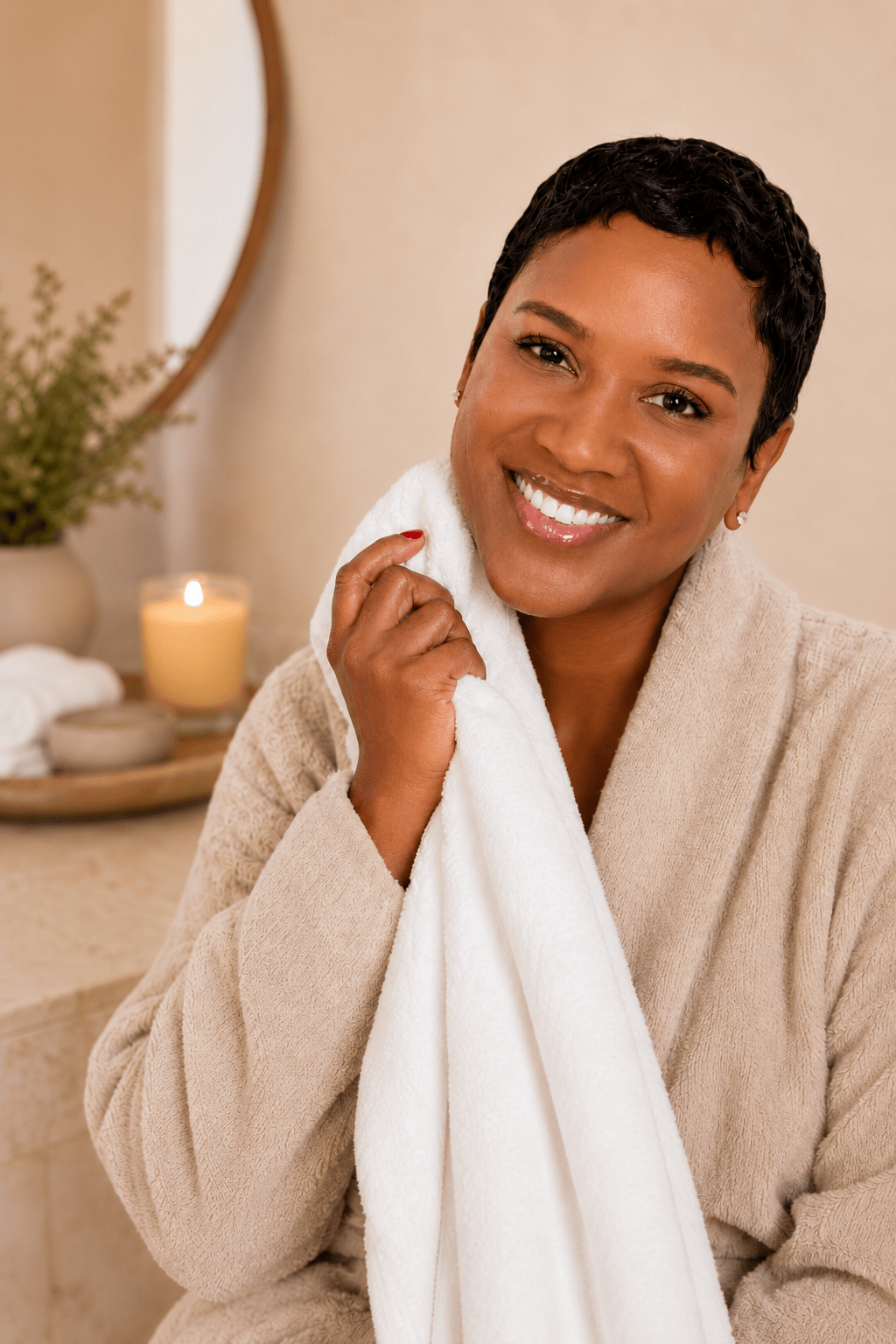
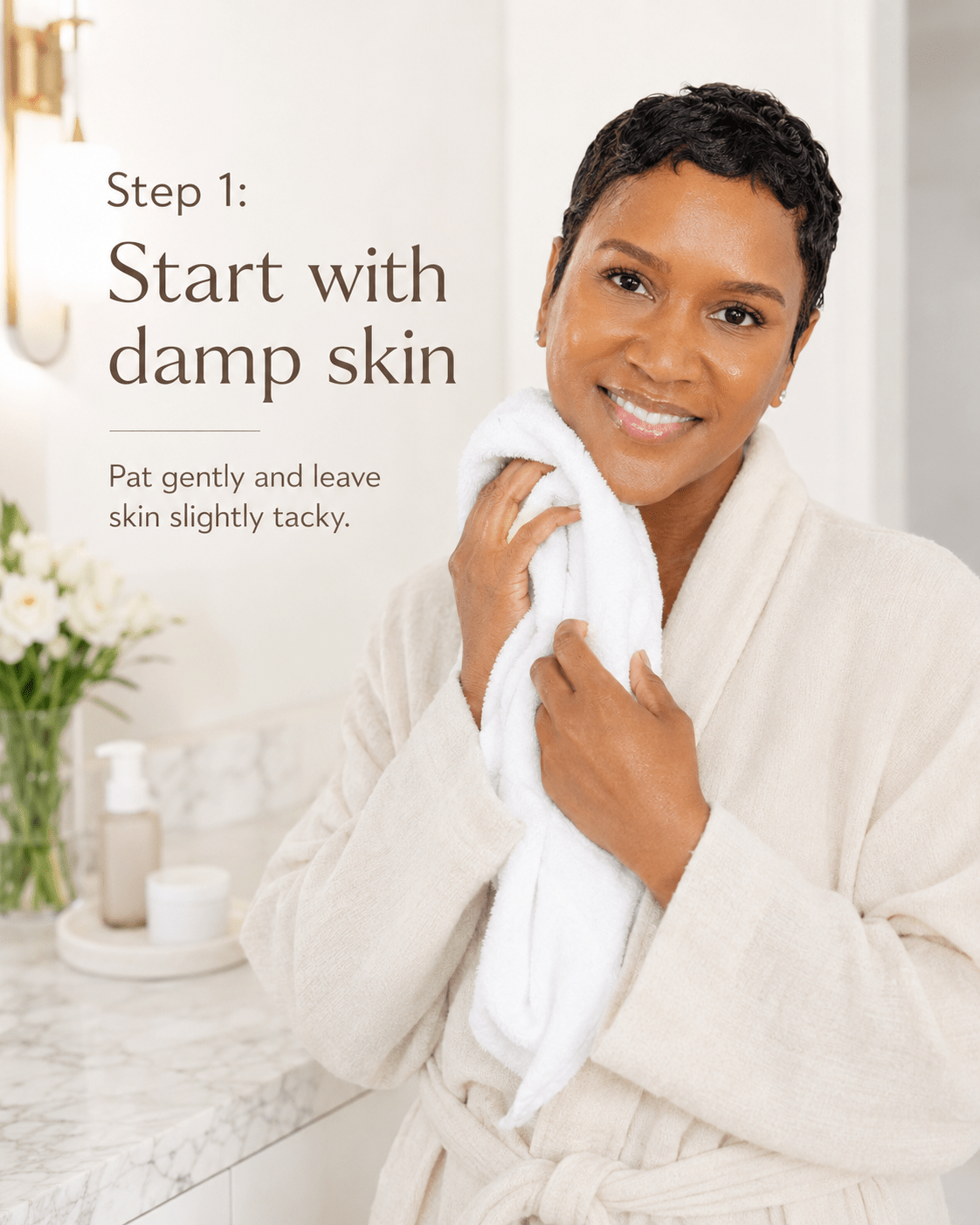
Step 1: Start with damp skin. Not soaking wet. Not bone dry. Slightly tacky. When you step out of the shower or finish cleansing, pat your face gently with a towel and stop while there’s still a thin layer of moisture on your skin.
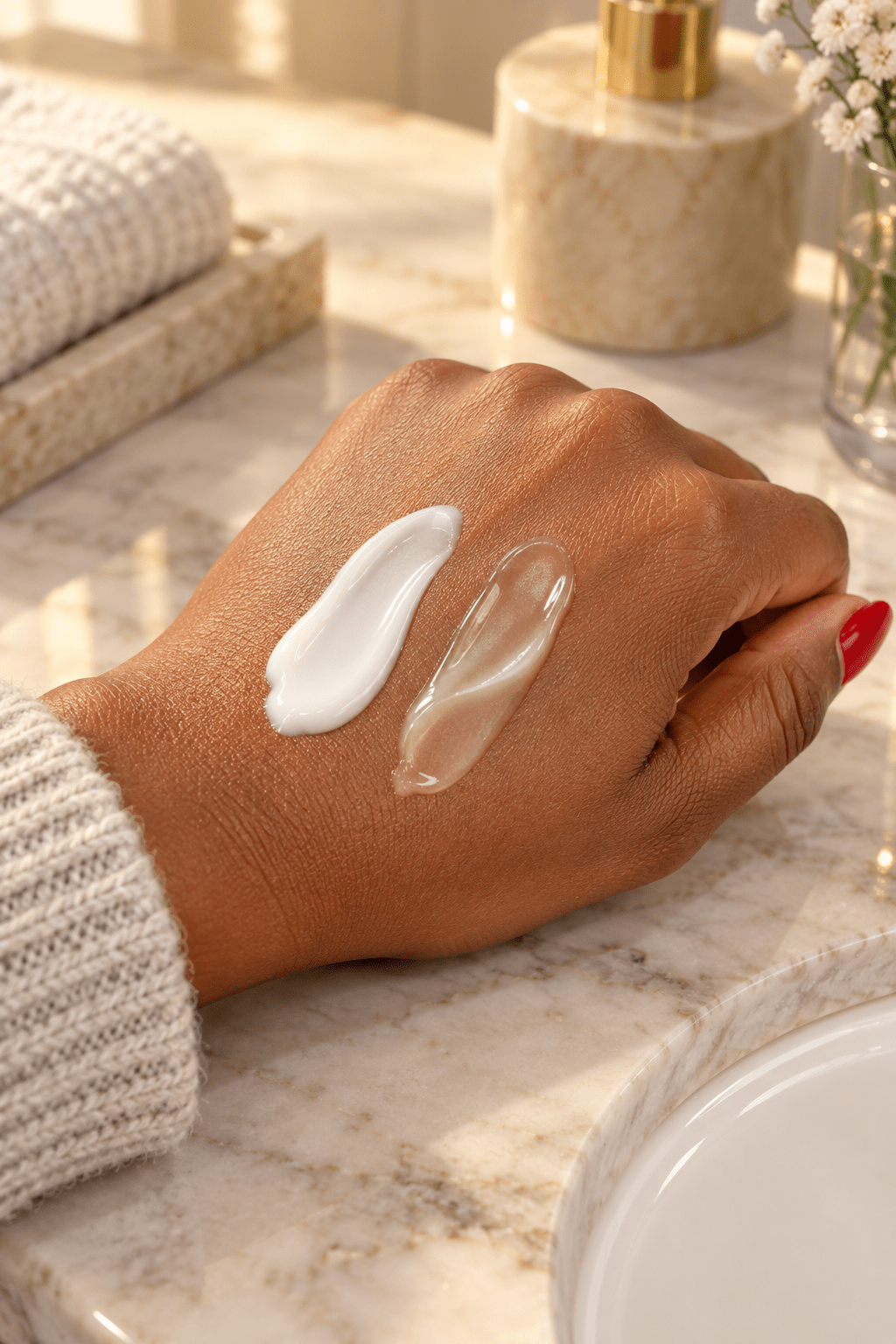
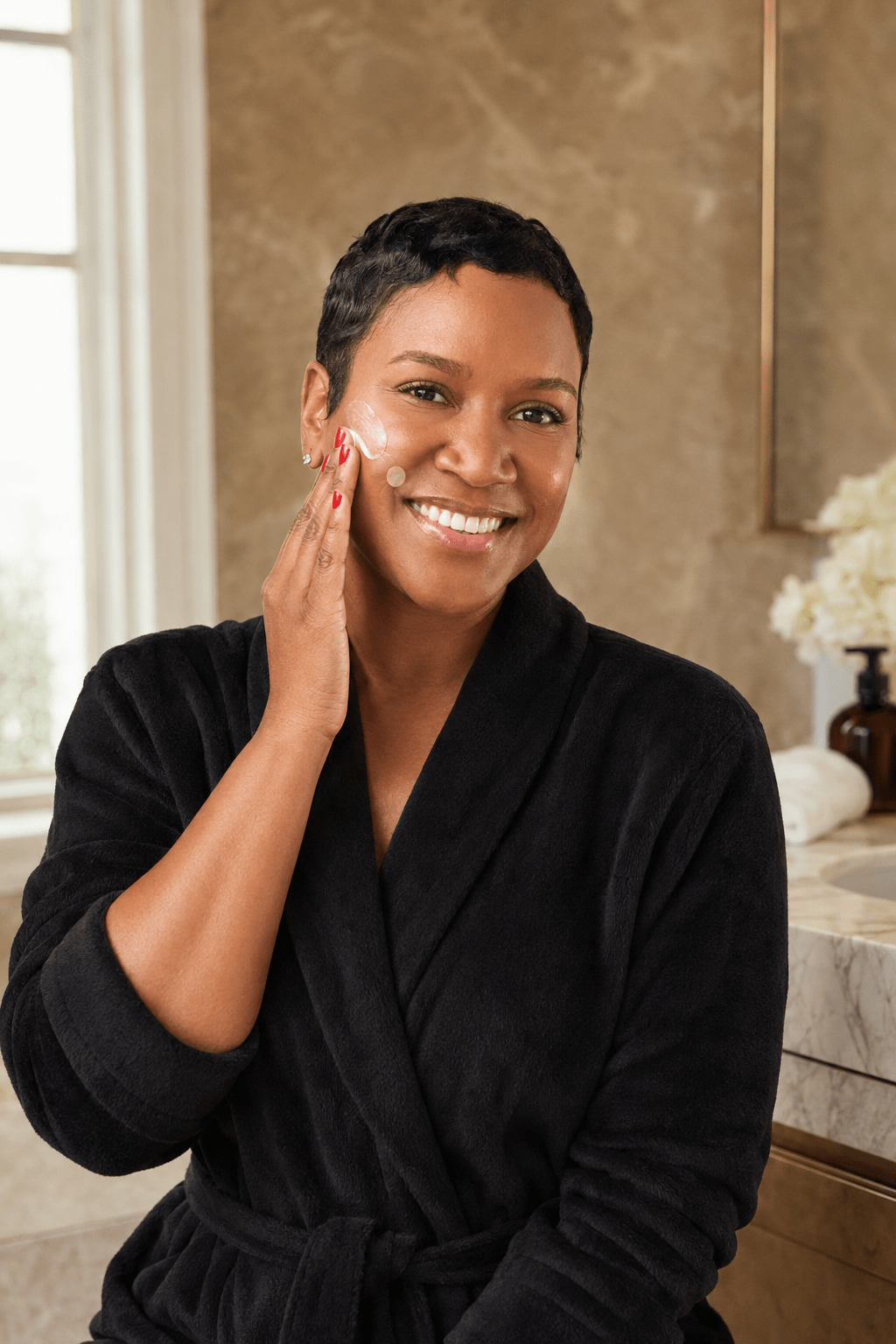
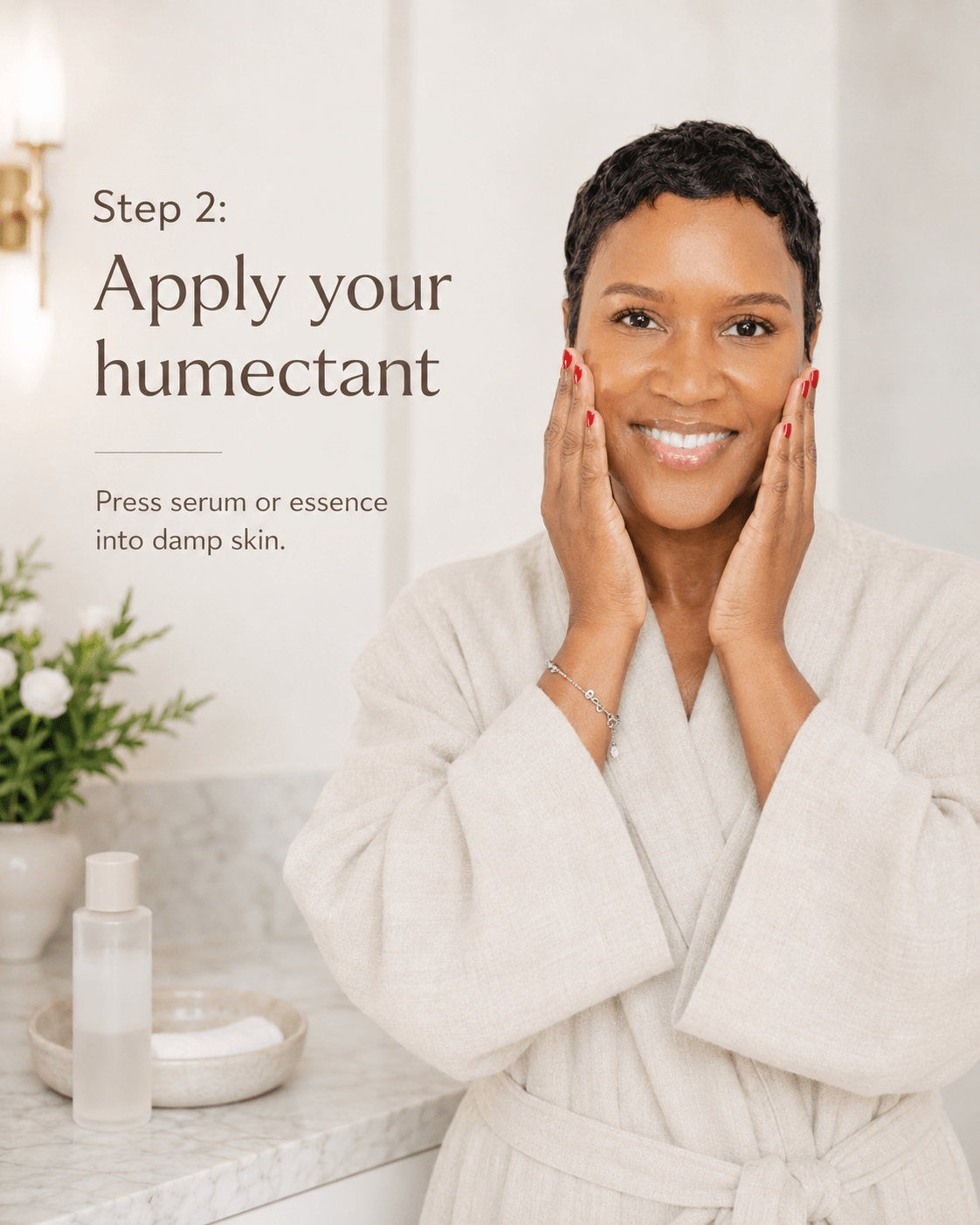
Step 2: Apply your humectant. This is your hyaluronic acid serum, hydrating toner, or essence. Press it into the damp skin rather than rubbing it in. You want it to absorb where it lands.
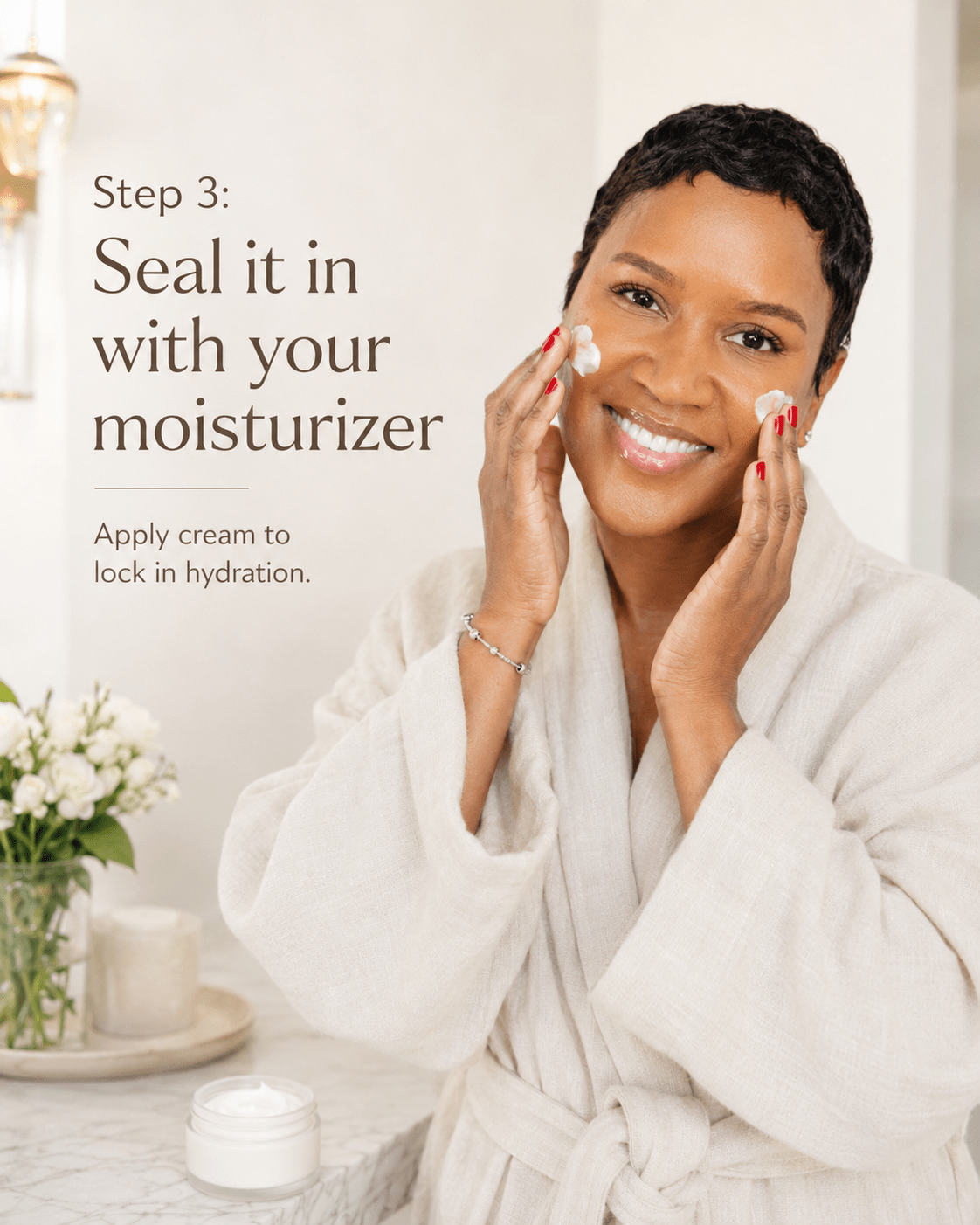
Step 3: Seal it in with your moisturizer. Apply your cream or balm on top, working upward and outward across your face. This creates the occlusive seal that keeps the water you just added from evaporating.
The deeper why behind each step:
Damp skin gives the humectant water to work with right at the surface. The humectant pulls that water into your skin and holds it there. Then the moisturizer goes on top and creates a seal that keeps the water from evaporating into the air.
Skip the damp skin step and your humectant has nothing local to grab. In dry conditions, it starts pulling water from your deeper skin layers instead, which is the opposite of the outcome you wanted.
Skip the occlusive seal and all that water you just added evaporates within minutes. The hydration step alone doesn’t last. The seal is what makes it stick.
The principle is simple. Each layer enables the next one to do its job. Skip one and the others don’t work as well.
Dana’s Tip: “Damp” doesn’t mean dripping. The easiest mental check is this: if water is running down your face, you’re too wet. If your skin feels completely dry to the touch, you missed the window. Slightly tacky is the sweet spot.
Where this fits in your routine
Hydration lives inside the Treat step of the 4-Step Routine framework (Cleanse, Treat, Moisturize, Protect). It’s not a bonus step. It’s the foundation that makes the Moisturize step actually work. For a full walkthrough of how to layer every product in your routine in the right order, read this post on how to layer your skincare products.
Why This Matters More in Your 40s
If you’re in your 40s and your routine feels less effective than it used to, you’re not imagining it. Your skin has measurably changed.
Your skin makes its own hyaluronic acid. According to research published in the Journal of the American Academy of Dermatology, your skin’s hyaluronic acid content starts declining as early as your 20s, and by age 50 you’ve lost roughly half of it. So if you’re in your 40s right now, you’re not at the bottom of that curve, but you’re well into it. (Source: Journal of the American Academy of Dermatology, 2016)
That’s why the routine that worked at 28 doesn’t work the same way at 43. The water-holding capacity of your skin has changed. On top of that, your skin barrier also gets thinner with age, which means water escapes more easily. So you’re losing water faster and holding less of it. If your routine feels like it’s no longer doing the work, the foundational fix is often barrier-supportive in nature. Here’s how to build a skincare routine that actually works after 40 once you’ve addressed the hydration piece.
The fix isn’t a heavier moisturizer. The fix is adding a hydration step that meets your skin where it is now, and making sure you seal it in.
What This Means for Black Women Specifically
There’s one more piece of this conversation that deserves its own space, because it’s something general skincare advice tends to skip entirely.
Our skin gets labeled as oily. The beauty industry says it. Dermatologists say it. Sometimes we even say it about ourselves. And yes, Black skin does tend to produce more sebum on the surface than other skin types, on average. But here’s the part the labeling misses entirely: oily does not mean hydrated.
A lot of us have skin that’s producing plenty of oil and is still dehydrated underneath. That combination of shine on the surface and tightness when you smile. Makeup that grabs in some places and slides in others. Skin that looks well-fed but doesn’t feel that way.
If that describes your skin, going heavier on cream usually doesn’t fix it, because the issue isn’t oil. What works better is layering a lighter humectant under a moderate moisturizer. You’re addressing the water shortage without piling more oil onto skin that’s already producing enough.
This is also one of the places where the right diagnostic question matters most. If your skin is shiny but feels tight, your skin isn’t telling you it needs less product. It’s telling you it needs different product, specifically a hydrator that addresses what’s actually missing. If your barrier is also compromised (and many of us are walking around with low-grade barrier damage we don’t even recognize), the right starting place is often barrier repair before anything else. Here’s the complete barrier repair protocol if you want to start there.
What to Look For (and What I Use)
Now for the practical part. When you’re looking at humectants and moisturizers, here’s what to look for and a few specific products I keep in rotation.
Humectants
Look for hyaluronic acid, glycerin, or panthenol on the ingredient list. These are the workhorses, and they show up across price points.
NIOD Multi-Molecular Hyaluronic Complex. The most concentrated humectant blend I’ve used. It includes multiple molecular weights of HA, which means it hydrates at different depths of the skin rather than just sitting on the surface. This is the one I reach for when my skin needs a real reset.
La Roche-Posay Hyalu B5 Pure Hyaluronic Acid Face Serum. A drugstore option that delivers a clean combination of hyaluronic acid and vitamin B5 at an accessible price. If you’re looking for an effective humectant without the higher price tag, this is one of the most reliable I’ve used.
Moisturizers
Look for ceramides, fatty acids, or squalane on the ingredient list to seal everything in. Plant butters like shea butter also work as occlusives for richer textures.
Skinfix Triple Lipid-Peptide Cream. The most consistent barrier-supportive moisturizer I’ve used. It combines ceramides, fatty acids, and cholesterol in the ratio your skin actually needs to repair and maintain a healthy barrier. This is my desert-island moisturizer.
La Roche-Posay Hyalu B5 Suractivated Face Cream. The moisturizer pairing for the Hyalu B5 serum, with a ceramide and hyaluronic acid combination at a drugstore price. If you want both a humectant and a moisturizer from the same line at a friendly price point, this duo holds up.
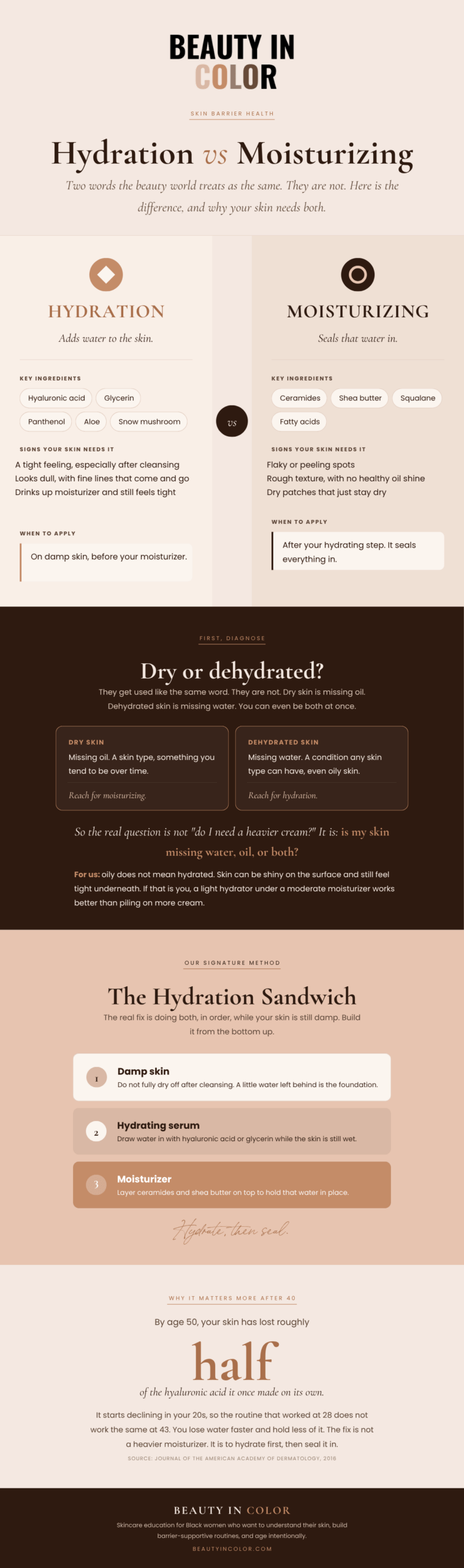
Caption: Save this to your Pinterest skincare board so the next time you’re standing in front of your bathroom mirror wondering what your skin actually needs, the answer is right there.
Watch the Companion Lesson
This post is your written reference guide for the hydration vs moisturizing concept. The companion YouTube lesson walks through the same teaching in a more conversational way, with visual demonstrations of the hydration sandwich technique and the diagnostic questions you can ask yourself.
Each topic on Beauty In Color is built to pair with a written reference like this one, so you can return to it whenever you need a refresher.
Watch the full lesson here:
Dry or Dehydrated Skin FAQ
Is my skin dry or dehydrated?
The fastest way to tell is to look at how your skin behaves over time and what helps. If your skin is consistently flaky, rough, and matte regardless of season, it’s likely dry. If your skin feels tight especially after cleansing, looks dull, has fine surface lines that come and go, and “drinks” moisturizer without feeling satisfied, it’s likely dehydrated. You can also be both.
Can oily skin really be dehydrated?
Yes. Oily skin and dehydrated skin are not mutually exclusive. Your skin can produce plenty of sebum and still be short on water. The signal is usually shine on the surface combined with tightness underneath, especially when you smile or move your face. The fix is hydration first, then a lighter moisturizer.
Do I have to use both a hydrator and a moisturizer?
Not always. If your skin feels comfortable, your barrier feels healthy, and your moisturizer is doing the job, you don’t need to add a separate hydrator. But if your skin feels tight, if you live somewhere dry, or if you’ve ever felt like your moisturizer is sitting on top of your skin instead of doing anything, that’s when a dedicated humectant earns its place in your routine. For most women in their 40s, doing both becomes the more reliable approach.
What’s the difference between hyaluronic acid and ceramides?
They do different jobs. Hyaluronic acid is a humectant, which means it attracts and holds water. Ceramides are part of your skin’s natural barrier and act as an occlusive when applied topically, helping to seal water in. You can use them together in the same routine, with hyaluronic acid as your hydrating step and ceramides as part of your moisturizing step.
How long does it take to fix dehydrated skin?
It depends on the cause.
- If the dehydration is recent and your barrier is otherwise healthy, you can see improvement within a few days of consistent hydration.
- If your barrier is compromised, expect a few weeks of consistent care.
- If the cause is ongoing (a dry climate, indoor heating, an over-cleansing habit), the dehydration will persist as long as the cause does, even with the right products.
Will drinking more water hydrate my skin?
Drinking water is important for overall health, including skin health, but it’s not a substitute for topical hydration. Water you drink doesn’t selectively migrate to the outer layers of your skin where dehydration shows up. The most effective way to address dehydrated skin is to apply hydration topically, with humectants on damp skin, and seal it in with a moisturizer.
The Bottom Line
Hydration adds water. Moisturizing seals it in. Both jobs matter, and depending on your skin, your environment, and your age, you may need both. The older you get, the more deliberate you have to be about doing both, because your skin is no longer doing as much of the work for you.
If you take one thing from this post, take this. The question isn’t “do I need a heavier moisturizer?” The question is “is my skin missing water, missing oil, or both?” Once you have the right question, the rest of your routine starts to fall into place.
This is the mindset behind Beauty In Color: helping you build a routine you can understand, sustain, and trust. The more you understand what your skin actually needs, the less you’ll spend on products that weren’t going to fix the problem in the first place.
What To Do Next
- Watch the companion YouTube video
- New here? Start Here
- Join the newsletter for weekly skincare education
Shop With Me
The products I keep in rotation, plus my budget-friendly picks, all in one place.
- My discount codes: beautyincolor.com/beauty-discount-codes
- My full edit on ShopMy: shopmy.us/beautyincolor
- My budget-friendly Amazon picks: amazon.com/shop/beautyincolor_official