Estimated reading time: 14 minutes
I have spent a good part of my forties standing in the skincare aisle doing math I did not sign up for. Twenty-something ingredients on the back of a bottle, a price that made me blink, and a little voice asking whether any of it was actually going to do something for my skin or just for the brand’s quarter. If you have felt that, you are not behind, and you are not bad at this. You are standing in front of an industry that makes more money when you are confused than when you are clear.
So let me be the friend who already did the reading. After 40, a surprisingly short list of ingredients does the real anti-aging work. Everything else on that shelf is maintenance or preference, and there is nothing wrong with either one, as long as you know which is which before your card comes out. That distinction, need versus nice-to-have, is the same muscle I walked through in how to choose skincare products without wasting money, and it is the whole game here, too. By the time you finish reading, you will know the short list, what each ingredient is actually for, and how to read the shiny new launches on your feed so a luxury price stops doing your thinking for you.
In This Post:
- Why The Ingredient List Changes After 40
- The short list, organized by the job it does
- The new ingredients everyone is selling right now
- What actually helps with tone
- Where this hits different for melanin-rich skin
- Two products, if you want a place to start
- Three mistakes that waste the most money
- Go Deeper in the Video
- Best Anti-Aging Skincare Ingredients FAQ
- The Bottom Line
- What To Do Next
- Shop With Me
Why The Ingredient List Changes After 40
Here is the part I wish someone had said to me plainly. The reason your old routine stops pulling its weight is not that you did anything wrong. It is that the skin itself has changed underneath you, in four specific ways, and each change quietly creates a job for your routine to do.
Your skin makes less collagen than it used to, so it loses some of its firmness and bounce. It renews itself more slowly, so old surface cells linger and everything reads a little duller and rougher than it feels like it should. It holds onto less water, so dryness shows up even for those of us who never used to think about it. And it reacts more easily, which for melanin-rich skin matters more than it does for anyone else, because our reactions do not always fade quietly. They can leave a mark that outlasts whatever set them off.
Those four changes are the entire reason the list changes. An ingredient earns a place in your routine when it answers one of them directly. Less collagen asks you to rebuild. Slower renewal asks you to renew the surface. Less water asks you to hydrate and hold it. More reactive asks you to handle all of it with a gentle hand. If a product cannot tell you which of those four jobs it does, it is a preference purchase. Buy it on purpose, or leave it on the shelf.
Dana’s Tip: Before anything new goes in your cart, finish this sentence out loud: “This is for the _ job.” If you cannot fill in the blank, you already have your answer.
The short list, organized by the job it does
None of these names are secret, and that is exactly the point. The value is not novelty. It is knowing what each one does, so you stop buying the same job three times and leaving another job completely undone. When you are ready to see how these actually stack into a daily lineup, I lay that out in how to build a skincare routine after 40. Here, I want you to know the cast.
Rebuild: retinol and peptides.
Two ingredients share this job. Retinol has more high-quality research behind it than anything else in anti-aging, which is why dermatology literature keeps calling the retinoid family the gold standard for skin rejuvenation. I am not going to pretend anything else on the market matches that track record, and you should be a little suspicious of anyone who tells you it does. Starting retinol is its own conversation, one I am giving a full post of its own, because rushing it is how a lot of us end up irritated and quitting before it ever had a chance. Peptides are the gentler partner in this job. They signal the skin to support its own collagen, which makes them a real complement to retinol, not a stand-in for it.
Defend: vitamin C.
This is your morning antioxidant. In plain terms, it helps neutralize the daily oxidative stress your skin takes on just from being out in the world, and the research from the Linus Pauling Institute points to it being most useful against UV-related damage, working alongside your sunscreen rather than instead of it. It belongs in the AM because that is when you are up against the day.
Renew: a gentle exfoliating acid.
As turnover slows, dead cells sit on the surface longer, and that buildup is a lot of the dullness and rough texture people blame on everything but the real cause. A gentle exfoliating acid clears them so the newer skin underneath can actually show. I will be honest that this is not a strictly after-40 ingredient, it helps at any age, it just earns more of its place now. The word that matters is gentle. For reactive skin, and ours can be reactive, pushing exfoliation too hard trades dullness for irritation, and I get into why that reactivity climbs with age in why your skin gets more sensitive as you age. Low and slow wins.
Hydrate: hyaluronic acid and ceramides.
One team, two roles. Hyaluronic acid pulls water into the skin. Ceramides help keep it from escaping. Since your skin holds less water after 40, this pairing stops being optional and starts being the difference between skin that looks tired and skin that looks rested. There is a real distinction between hydrating and moisturizing that trips a lot of people up, and I unpack it fully in hydration vs moisturizing. For here, remember it as one draws water in, the other locks it down, and you want both.
Dana’s Tip: Most of us are not under-buying. We are mis-buying, doubling up on one job while another sits empty. Audit your shelf by the four jobs, not by how many bottles you own.
The new ingredients everyone is selling right now
Now the fun, expensive end of the aisle, where the marketing is loudest and the proof is thinnest. I want to be clear that I am not here to roll my eyes at the science. I am here to tell you where that science actually stands right now, today, in a bottle you can buy.
Growth factors, often labeled EGF.
EGF stands for epidermal growth factor. Growth factors are signals your skin uses to repair itself, and they slow with age, so the concept of topping them back up is a reasonable one. I have used a growth factor serum long enough to feel honest telling you it is worth a look. But the honest part cuts both ways. The research is younger and thinner than retinol’s, so this does not belong in the same tier, and I will not dress it up as if it does. You will also hear that growth factors are large molecules that struggle to absorb, which is a fair point about the raw ingredient. What actually matters is whether the finished formula is built to deliver it, so judge the product and your own results, not the buzzword on the front. Promising and emerging is the right frame. Worth your curiosity, not your blind trust.
PDRN and exosomes.
PDRN is the one your feed has been calling salmon sperm. Exosomes are the other name riding the same wave. Different ingredients, same rule, and it is a rule worth memorizing because a new one will trend next month: almost all of the impressive results behind these come from in-office procedures done by a professional, not from the serum you smooth on at home. The at-home bottle is a far weaker story than the marketing suggests. And these newer ingredients are not held to the same standard of proof as the ones we already trust. With exosomes specifically, the FDA has publicly flagged unapproved products, which tells you how early this all still is. So when a brand-new name shows up on a label at a luxury price, read that as a reason to slow down and ask where the proof is, not a reason to reach for your wallet.
The front of the bottle is marketing. These pretty new words are simply the prettiest part of the front.
What actually helps with tone
Now, the relief: because saving in the right places takes nothing away from your skin.
Tone and dark spots come up in my DMs more than almost anything else, and I hear it most from other Black women, so let me name the part that the launches never advertise. The two ingredients with the deepest evidence for tone are not the flashy new names. Niacinamide supports the skin barrier and has real research behind it for the look of uneven tone and post-inflammatory marks, including work specifically in skin of color. Vitamin C helps here too. Both are proven, and both are among the most affordable things on the shelf.
Sit with that for a second, because it is the quiet victory of this whole post. The best-supported answer to the concern we care about most is not the luxury drop. It has been sitting on the shelf, doing the work, the entire time. I am keeping this to what helps and why it matters, because the full approach to dark spots and post-inflammatory hyperpigmentation in our skin, the actual routine and order of operations, deserves its own post and is getting one.
Where this hits different for melanin-rich skin
When we invest in our skin, the cost of a wrong turn is not only the money, though that stings. It is that irritation on melanin-rich skin can leave discoloration that hangs around long after the irritation itself is gone. That raises the stakes on two specific mistakes below, stacking too many actives and pushing exfoliation too hard, because for us the visible bill can arrive weeks later and stay.
The reassuring flip side is that the ingredients best supported for our top concerns, niacinamide and vitamin C for tone, are also the gentle, accessible, well-studied ones. You are not being asked to choose between what is safe for your skin and what is kind to your budget. They point in the same direction. And all of this rides on a healthy barrier, which is the foundation I always come back to and cover in what your skin barrier actually is.
Two products, if you want a place to start
The teaching above is the part that matters, so treat these as optional. If you do want two specific products to look at, both slot cleanly into jobs we already covered, one for rebuild and one for growth factors. I have used both, which is the only reason they are here and not a longer list.
For the rebuild job, there is NIOD Copper Amino Isolate Serum (CAIS 3 1:1). Copper peptides are a well-studied peptide form, and what it does for your skin is give the rebuild job a second, gentler hand: it supports your own collagen work as a complement to retinol, never a replacement for it.
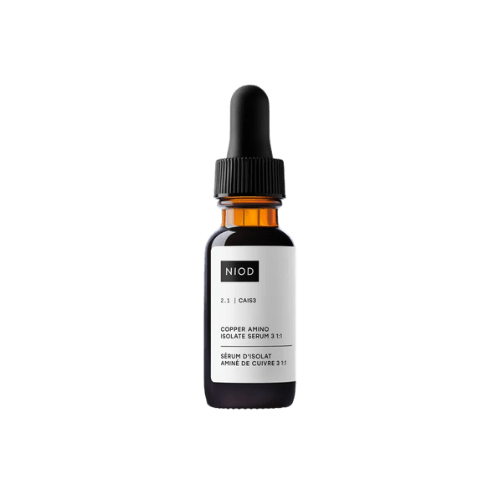
BUY IT HERE: https://go.shopmy.us/p-68903256
For the growth-factor category, there is BioEffect EGF. What it offers you is a way to try the growth-factor idea, more of the repair signals that slow with age, from a formula built to actually deliver it. Held honestly, it is promising and emerging, worth a look, not a stand-in for retinol.
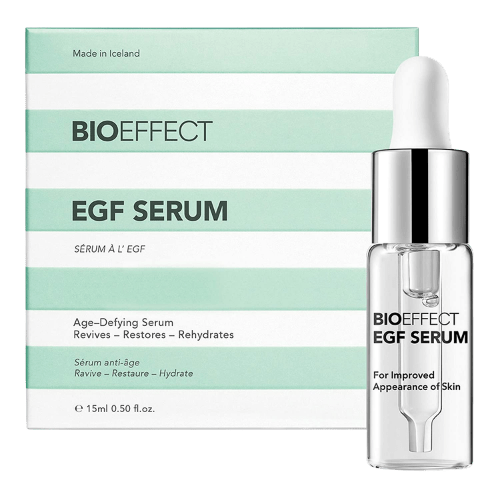
BUY IT HERE: https://go.shopmy.us/p-69344700
BUILD YOUR SHORTLIST: browse my Anti-Aging Routine collection and fill the gap your routine is actually missing.
Everything else I would point you toward lives in the collection, sorted by the job it does, so you can fill an actual gap instead of buying your fourth product for a job you already cover.
Three mistakes that waste the most money
- Buying the buzzword instead of the evidence. The newest word on the label is almost always the one with the least proof behind it. New is not a synonym for proven, no matter how good the packaging is.
- Stacking too many actives at once. Retinol, an acid, a vitamin C, and three trending serums all in the same week is not a routine, it is an irritation waiting to happen, and for us, that irritation can leave a mark that costs more than the products did.
- Switching before anything has had time to work. Real ingredients need weeks to show you what they do. If you chase the next new thing every few days, nothing ever gets a fair trial, and you never learn what actually works on your skin.
Go Deeper in the Video
This post gives you the map. The video is the walk-through. On YouTube, I take each new ingredient one at a time and say the honest read out loud, with the tone and nuance that writing tends to flatten, and you can see the side-by-side of what is proven against what is only trending. If you take things in better by watching, or you want to hear how these actually get weighed before any money is spent, that is where to go next. The comments are worth reading too, since that is where a lot of us compare notes.
Watch the full lesson here:
Best Anti-Aging Skincare Ingredients FAQ
- What are the best anti-aging skincare ingredients after 40? A short list, sorted by four jobs: rebuild (retinol and peptides), defend (vitamin C in the morning), renew (a gentle exfoliating acid), and hydrate (hyaluronic acid plus ceramides). Those address the specific ways skin changes after 40. Most everything else is maintenance or preference.
- Are growth factors (EGF) worth it? They are promising and emerging. There is real science, but it is younger and thinner than retinol’s, so treat a growth factor serum as worth a look rather than a hero product. Judge the finished formula and your own results, not the molecule on the label.
- Do exosomes and PDRN (salmon sperm) work in a serum? Most of the striking results behind them come from in-office procedures, not the at-home bottle, and they are held to a lower standard of proof than established ingredients. The FDA has publicly flagged unapproved exosome products. A new name at a luxury price is a cue to slow down, not to buy.
- What ingredient is best for tone and dark spots? The two with the deepest evidence are niacinamide and vitamin C, and they are among the most affordable things on the shelf, not the luxury launches. The full approach to dark spots in Black skin is its own post.
- Can I use all of these ingredients at once? No, and trying to is one of the three big money-wasters. Stacking too many actives invites irritation, which for melanin-rich skin can turn into lingering discoloration. Add jobs gradually and give each one several weeks.
- Is exfoliation only for skin after 40? No. Clearing dead surface cells helps at any age. It simply earns its place more after 40 because turnover slows. Keep it gentle, low and slow, especially if your skin reacts easily.
The Bottom Line
It really does come down to this. Match an ingredient to the job it does, rebuild, defend, renew, or hydrate, and you stop paying twice for one job while another goes undone.
The new ingredients flooding your feed are worth your curiosity, not your whole budget. Growth factors are promising and emerging. PDRN and exosomes are still mostly an in-office story. And the best-supported answers for the concerns we care about most have been sitting on the shelf, quietly doing the work, all along.
The newest word on the label is usually the one asking for the most trust while offering the least proof. Make it earn its spot before it earns your money. That is not being cheap. That is being the kind of consumer this industry did not expect you to become.
After 40, the real work is done by a short list, not a long one. Rebuild what is slowing down. Defend against the daily damage. Renew the surface. Hydrate and hold it there. Four jobs, each chosen on purpose.
What To Do Next
- Watch this week’s video for the full walkthrough and the honest read on each new ingredient.
- New here? Start Here
- Join the newsletter, Beauty In Your Inbox, for the weekly lesson delivered to you.
- Everything I use and recommend, plus my budget-friendly picks, is in the Shop with Me section just below.
Shop With Me
The products I keep in rotation plus my budget-friendly picks, all in one place.
- My Anti-Aging Routine collection on ShopMy, the full routine in order.
- My Aging Skin 40+ collection on ShopMy, everything I point to for 40+ skin.
- Discount codes: beautyincolor.com/beauty-discount-codes
- My budget-friendly Amazon picks, the wallet-friendly options in one shop.